
→ Tired of throwing spaghetti at the wall with your marketing? In Expand, we’ll create your custom strategy FOR you and execute it WITH you. Plus, join by September 2nd and you’ll get a bonus messaging deep-dive call (so your copy instantly connects with your ideal customer!): get.embodiedmarketing.com/expand
Building a brand isn’t about logos and colors. It’s about knowing who you are at your core – and that foundation becomes everything when life gets hard.
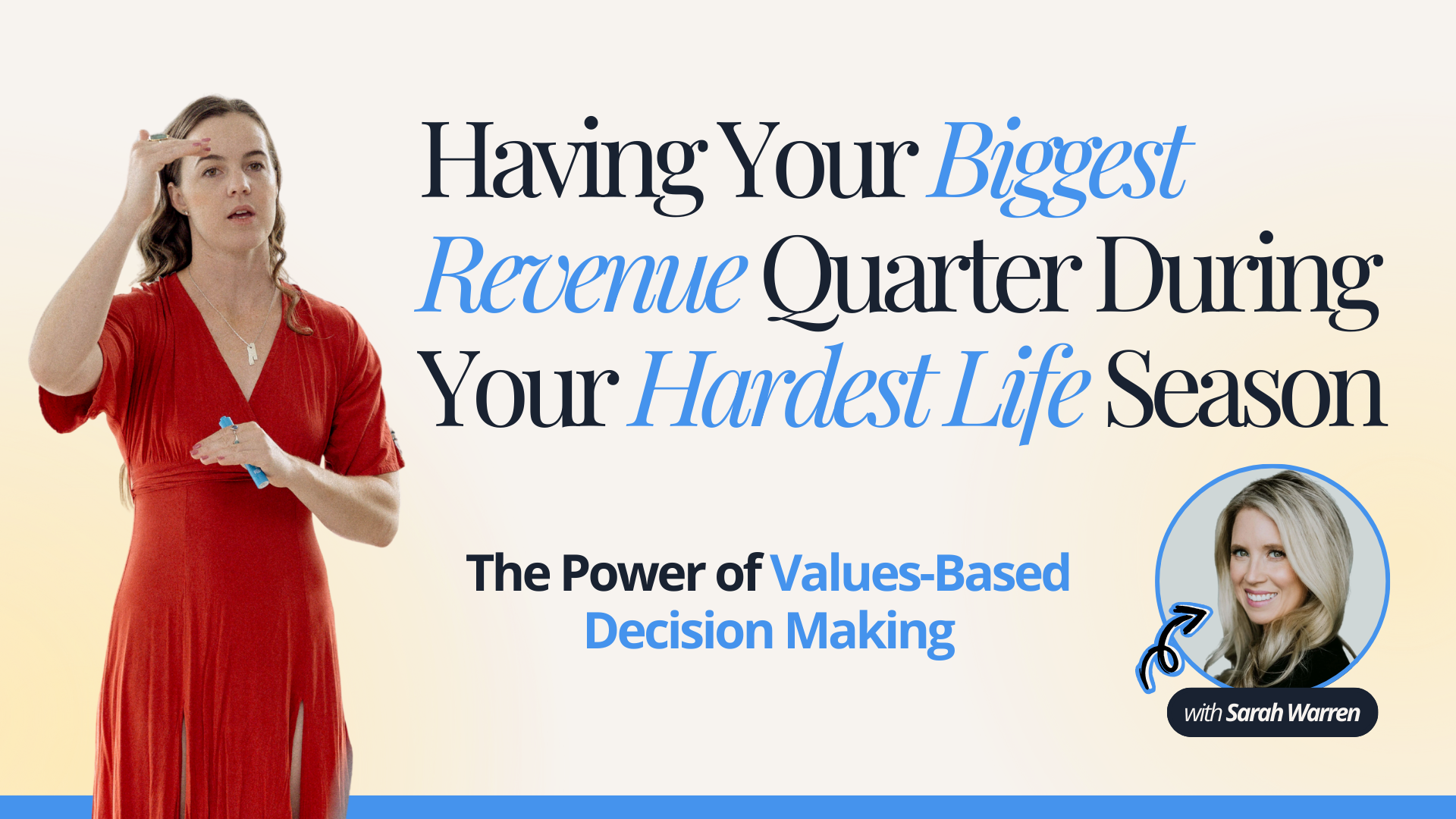
Sarah Warren learned this lesson working with multi-million dollar fashion brands. But she really embraced it when her marriage ended overnight and she found herself building a business as a newly single mom.
If your business only works when everything goes perfectly, this episode will teach you about storm-proof growth.
Key Takeaways
- What drives million dollar brands—why major brands spend months on core identity work before launching any campaigns (and how to apply this to your business)
- The simple word-of-mouth strategy that outperformed complex funnels—how Sarah focused on past clients and referrals to create her biggest revenue quarter without ads or complicated funnels
- Why personal alignment is your competitive advantage—how inner work around your beliefs and values creates the consistent revenue you’re looking for
___________________________________
More ways Embodied Marketing can support you:
If you’re ready to hand off your entire marketing strategy (from funnels to ads to copy) and finally get the expert team you can trust, apply here and let’s talk: helpmystrategy.com
WANT TO WORK WITH TEAM EMBODIED MARKETING?
Honestly, we’re more than a marketing team — we’re a tactical partner who will care about your business growth just as much as YOU (maybe even more)!
We’re here to play the long game and help you create a powerful impact!
SUBSCRIBE & REVIEW THE PODCAST!
Thanks for tuning into this week’s episode of the Embodied Podcast! If this podcast has added value and helped you in your business journey, please head over to Apple Podcast, subscribe to the show, and leave us an honest review.
Your reviews and feedback will not only help us continue to deliver great, helpful content, but it will also help us reach even more amazing entrepreneurs just like you.
READ THE EPISODE TRANSCRIPT
Emily Hirsh: In today’s episode of the podcast, I was joined by Sarah Warren.
Sarah Warren: We dug really deep to do that work and figured out, you know, at its core, who is this company? Why does it exist? Who is it here to serve?
Emily Hirsh: We went deep into her experience in branding. She’s worked with big names like Kate Spade, Ivanka Trump, and other incredible companies.
Sarah Warren: What we were doing was the whole brand that Ivanka had built was for women who work, and we referred to it as this Multihyphenate woman. The powerful transformative stuff comes from the stuff that’s not seen, and that’s taking the time to really get to the root of who are you as an organization. She shared
Emily Hirsh: so beautifully how she’s navigated a season
Sarah Warren: recently.
Gosh, what if we both fail? And you were like, even if you fail, like the worst case scenario, you’ve still got each other. There are more good days than bad days for sure.
Emily Hirsh: You are going to love this conversation. Embodied CEOs don’t chase trends. They pave the way. They lead from within. Move by purpose, unshaken by noise.
When you are the source, you do not need permission. Hello, welcome to the show. Thank you. I am so excited we’re finally sitting down and getting to do this. It’s been such a beautiful, what, six is it? Six I guess like eight, nine months since I really got to know you. Yes,
Sarah Warren: since January, right? Yeah.
Emily Hirsh: And got to know you deeply in my mastermind and work with you.
Yes. Yeah. I’m excited to dive in with you today.
Sarah Warren: Me too.
Emily Hirsh: Let’s start a little bit with your background and your story. You have a fun story of all different things that you’ve done in career to business, so wherever you feel is relevant to dive in, let’s start there. Okay.
Sarah Warren: Well, I am a brand strategist and executive coach.
I work with large organizations, startups, founders and senior leaders across different different categories. I started in copywriting and I worked with a bunch of different fashion houses in New York. I started at J Crew and moved to Kate Spade. Spent a good amount of time there and that was super foundational for me in figuring out kind of the essence of a brand.
And that’s shaped the way I look at branding and have looked at branding for the last 15 years because I think that what they got right was they were a founder led brand and I joined right after Kate and Andy had sold the company and had departed and. Kate Spade itself had been really influenced by Kate, the person.
And so when they brought me on, what I wound up doing in partnership with their wonderful creative team was evolving this brand from Kate, the person to Kate, who became just a global representation. And we dug really deep to do that work and figured out, you know, at its core, who is this company? Why does it exist?
Who is it here to serve, whether it’s doing you know, when I was there we were doing apparel and stationary and, but we wanted to create a brand that eventually could do, you know, real estate or airlines. The sky’s the limit. So in how we set that up, we wanted to leave, we wanted to be very specific, but leave all doors open for future growth.
And that’s been, that’s been a tenant I’ve held on to. So I left Kate Spade and when my daughter was born and spent about two years at home with her, had my son Jack and in that time consulted for different brands. Oscar, Dale, Lorena was one. Vince was another different fashion companies who were working to establish a point of view and wanted to make themselves as relevant externally as they were internally and attract an audience that really loved and believed in what they were doing, not just through their products, but at their core.
And then when my family decided to leave New York and move to New Mexico, I thought this is the end of the road for my fashion journey because I. Albuquerque where we were going. Didn’t even have a Nordstrom. You know, I thought, who would want a fashion writer in the middle of nowhere? And it took me some time to make peace with that, but I did.
And then on the day the moving truck came, I met a former colleague for coffee and she was working with Ivanka Trump on Ivanka’s fashion brand. And she said, we have been looking for an editorial director and cannot find one. Would you consider working with us remotely? And we thought, sure, we’ll try it for three months.
And that became three years and, and never looked back. That was a wonderful experience.
Emily Hirsh: Wow. And that, I remember you telling me that story in depth. And that was before COVID, before like remote work was a thing. So also they saw the value and you’re so incredible. They were like, we’ll create this remote position that’s really never been remote before.
Yes. And that experience, I know some of it we can’t go into detail of, but that experience of getting to be behind the scenes during that election time and, and those. Yes. Incredible experience that you had.
Sarah Warren: Yes. And that was really at the very end of, of the brand experience, but you’re, you’re spot on in that remote work really wasn’t a thing.
And and that, that team took a chance on what we were doing was the whole brand that Ivanka had built was for women who work. And we referred to it as this Multihyphenate woman who was equally invested in her career and her family and her hobbies. And so, you know, that that team really practiced what they preached.
And I was able to work from Albuquerque and then travel to New York. And for me it was the best of both worlds. And in doing so, I think we, you know, we paved the road in some ways for other women who didn’t wanna have to choose between career and family to be able to do the same.
Emily Hirsh: So incredible. So when you started in branding, was the goal, like, did you go to school and it was like, I’m gonna go into branding, or did you happen upon that?
Sarah Warren: I totally happened upon it. I wanted to be a journalist. I wanted to be a journalist. From the fourth grade, I had my own little newspaper printed off on a dot matrix printer that my friend and I sold to our neighbors. And I went to school for journalism, worked in Dallas for a magazine and traveled to New York for Fashion Week and fell in love with the city and thought like, this is where I belong.
And so my husband at the time and I had just bought a house in Dallas and we thought, shoot, we did this too soon. And so we listed our house, we like opened the doors and had a sale where people were buying like the shampoo off our shelves. And we moved up to New York with our mattress and a table and found work there.
That was like the rest of his history.
Emily Hirsh: I love it. The, I bet you look back on those times like I do, I know, I do like the beginning of just like, in the moment you don’t realize like it’s the beginning of everything. Yeah. And how simple it was. Yeah. And, and like how many lessons are in that and how we don’t need all the things that we think that we need.
Yeah. And it really creates, I don’t know, the character of, of resiliency and, and like the ability to take the risk Yeah. And be like, sell the house, move, do the crazy thing. Yeah. And yeah. I love that. I didn’t know that part of the story too, that you guys Oh yeah. Just like decided to move and we did start the career and so then you moved there and you got the job at Kate, Spain.
Sarah Warren: No, I moved there and I got a job at Conde Nast and I was in their marketing department and so that was my first exposure. I shifted from editorial to marketing and was working with advertisers. From there I moved to J Crew and that was when New York hit a recession. J Crew, which had been going in a very kind of Hamptons waspy vibe, suddenly was repositioning themselves and it was more about affordable luxury and, you know, cashmere for everyone at lower price points.
And so as a writer, it was a really cool experience of rebranding. And I got to learn from some of the best. It was in the Jenna Lions era and Mickey Drexler was there and it was just a fascinating time to see the inner mechanics of a retail brand, but I fell in love with it. And so from J Crew, I went to Kate Spade.
And Kate Spade was, you know, more my scene in every single way. It was the most incredible people, like nothing. The sky’s the limit in terms of ideas and. It was so fun. It, that was, that was a really fun chapter and I was there for about three years.
Emily Hirsh: I’m so interested to pick your brain a little because a lot of, you know, the digital world, I feel like, and these small businesses lack the skills of branding like these big brands do, and I think there’s so much to learn from watching the big brands with the big budgets and the companies you’ve been behind the scenes on and, and learn like what their marketing conversations are and their branding conversations.
So I’m sure that could be a whole like, multi-hour conversation. Yeah. But I’m curious. What you would say around like Kate Spade for example, and taking Kate out of the brand and then, and then, you know, bringing more like the values of a company and that, that’s something that I see a lot of like entrepreneurs go through, right?
They start this business and it’s even myself, it was like it’s Hirsch marketing when I started and then working on removing it, being about me and more about the movement and the brand. What are some of the, you know, key things that come to your mind that worked in that time?
Sarah Warren: Yeah, it’s a great, great question.
And I have seen that transfer right into coaching in the same way, because I think what now, at least when people find me, it’s for the work that’s seen. It’s because a company thinks they need, you know, better positioning or content or more marketing or with the case of coaching, it’s a leader who feels like she needs help negotiating or more executive presence.
But it’s actually the like the, the powerful transformative stuff comes from the stuff that’s not seen. And that’s taking the time to really get to the root of who are you as an organization? Who are you as a person? What are you here to serve? You know, what are your core values? The things that you can’t really teach somebody, but if they’ve got them, then you can.
Figure out the rest of it. You know, the stuff that become your guardrails that you hire and fire and hold onto regardless. And with Kate, we really spent a lot of time working through, you know, what was our mission, what was our north star, what was going to, as all these new opportunities were coming, whether it was licensed product or campaigns or influencers were, influencer marketing was becoming bigger and bigger at the time.
You know, what were our guardrails that would help us be super focused on in everything we did, putting the same unified image out there. And with Ivanka too, we spent a lot of time it, you know, it felt like a luxury of time just building this foundation of who is this brand? Why does it exist, who does it serve?
And when things did get crazy. Three years in, you know, in the election cycle, we had a rock solid foundation that I think our team was able to anchor to in a way that though the circumstances had changed, we really didn’t whipsaw because we had spent so much time and focus building, we knew who we were.
And it’s, it is the very same with clients, just taking that time to understand at your core, why are you here? Why do you exist? And, and that is something that I think also, I don’t wanna say companies get wrong, but when there is misalignment, when there’s stagnation, when a lot of times when a leaders hit a plateau, it’s because there’s confusion at the core.
You know, there’s either not a direction, there’s too many directions you’ve accidentally. Taken on someone else’s direction, and that’s not true for you. And so the work then becomes teasing out, you know, this deeper system of what do I believe? What do I believe about myself? What do I believe about this business that I’m building?
You know, where do I wanna go and why? And in my experience, it is doing that, that deeper inner work to create the alignment that suddenly reduces the friction and eases the way for businesses and people to really shine.
Emily Hirsh: It’s so true. I mean, it’s the foundation and in, in different ways. I talk about this with like the messaging and your marketing, and it really does come back to the values that you have and.
Than the emotion the emotional connection that you’re wanting to create. Yeah. And like how you wanna represent as a brand. And I think just like you said, it’s like people think this is their problem. It’s like I need different colors and Yeah. Fonts and, you know, better copy. And it’s like Yeah. But a layer deeper than that is what’s gonna drive the decisions Yeah.
On those things.
Sarah Warren: Yeah.
Emily Hirsh: And I think especially small businesses don’t take the time Yeah. To do that. They don’t know how, they don’t know the questions to ask and how to do that. But the big companies, like you’re saying, you had it a lot of time with Ivanka to do this. It, I think it’s harder for small companies to spend a lot of time on it.
’cause they, they don’t have the budgets. I, I do too. So Yeah. They don’t spend the time. But even if you pause and spend the time, like if I were to start a new company today, I would literally start with core values Yes. Of the company. Like first thing I would do and not, you know, chat. GPT wrote the core values.
Yes. Like truly what are the core values of this company that are gonna drive the marketing, that are gonna drive the team, that are gonna drive. Forward first thing I would do and, and spending that time on it saves you from so much. Yeah. Lack of clarity. And then you said an important point, which is you get stuck in like what you should be doing and what others are, are doing.
And then that noise mm-hmm. I think is so common for businesses as they grow. And then what happens is the industry changes or the market changes, or like, you know, influencer marketing starts to become a thing. Yeah. And you can lose your like north star Yes. In that because you can start to, you know, feed into that noise.
And so then pausing and coming back to, okay, what, what are, what’s the movement we’re creating? What’s the values? And then let’s make decisions from that place.
Sarah Warren: Yes. And every time a decision, you know, you get to a point where you need to make a decision or you’ve got an opportunity that you’re vetting or you’re making a hire and you’re considering a couple different candidates going back to that same anchor of these are our values, this is our vision, this is what we are working towards.
This is the stuff that, whether it’s popular today or not, is important to us as an organization and will hold true and make decisions around and, and at every moment, being able to use that as your filter in time, it becomes second nature, but you’re right up front. It takes a lot of effort
Emily Hirsh: and it feels like almost counterproductive, I think, to new entrepreneurs.
Mm-hmm. Like I think if you told me at 19 years old when I was starting a business, I needed to write my core values. Yeah. I probably wouldn’t have done it actually. But today I see, you know, the value of that. Yes. Yeah. So I know in your one-on-one you sometimes do work with smaller companies today. I’m curious, like when you compare smaller companies, which.
A lot of my audience. And then we bring in the big, the Kate Spades, the big corporations. What can we learn from the big corporations as the smaller companies? Because I, I really love looking at these big companies with the big budgets mm-hmm. And the, the big space and capacity to do these things. And then going, okay, well how do, how do you tailor that, I guess, to a company doing less than a million dollars a year?
Mm-hmm. Like, what do they focus on to still get the same outcome, but within their means?
Sarah Warren: Yeah. I think that the big companies, I think there are big companies that do it really well, and I think there are big companies that still hit the mark because it, it is less an issue of budget. You know, if you can, if you’ve got an amazing budget, sure you could do a fabulous campaign, but if you’re not clear on who you are and where you wanna go, you’re just buying time.
Right? You’re not actually like building building an ecosystem with. Clients or customers who want to join you, who wanna be with you, who are curious about what you’re gonna do next, who share your beliefs and your ideas. And so I think that that small businesses, that founders who are preparing to launch something, that it really is sitting down and giving yourself the free space to plot out, okay, what, what are my dreams?
What am I trying to do here? You know, what does this exist to do? Making a lot of money isn’t enough. You hope that you can ladder that on probably, but it’s gotta go deeper than that. And so I think pulling out, you know, what is it about me that is excited about this when I wake up and I can’t stop thinking about it?
What piece of it is true? What’s rattling around in my head in the middle of the night? What problem am I trying to solve? Who am I trying to serve? What’s going on for them that I’ve got a unique perspective on, and starting to map out those different pieces creates an identity that, that you just continue to grow into.
Emily Hirsh: And that drives marketing content and all those pieces.
Sarah Warren: It does. It does, yes. Because then instead of having to fabricate or manufacture new campaigns, new hooks, everything you’re doing is just growing out of who you are and who you serve and what problems exist and your perspectives on them.
Emily Hirsh: And I mean, that’s ultimately how you create authenticity too.
Yeah. That’s how you stand out. Which, what is a good brand? It’s one that stands out from the noise and is able to capture attention and capture the people to take action within the brand. Right. Which you do that through everything you’re saying, the messaging, which starts with the clarity within you on, on why you’re doing it.
Yes. The values. So if you have a brand new client today who’s. Let’s say struggling with their brand mm-hmm. And, and be standing out mm-hmm. And I come to work with you. What would be the first things you would do? I think I already know the answer to this based on what you said. Yeah. But I want people to like really get this of, of what they could do tactically to still have a brand that’s as powerful as these big ones.
Sarah Warren: Yeah. We would, we would first talk about like the stuff that is most urgent and immediate on your plate. And we would capture all of that because that’s really important. And if, you know, usually when a founder comes and finds me like they burnt the wick at both ends and we’ve gotta quickly address what’s happening and also get to the root and find a new way of being and set them up for longer term success.
So we would capture those immediate things you would write down. All of the stuff that’s going on that is draining your energy, that is questions that need to be answered where we might need support. We get all of that, you know, out of your head and onto paper. We sift through that, but then simultaneously we start working on, okay, who, who are you as an organization?
Who are you as a person, as a leader? How do you want to be showing up? We start building the vision for if everything is working well, how are you in your every day? What is your support system like, what does your company look like? How are you spending your time? What’s going on in your business? Who is there with you?
And, and we kind of use the two to create a picture of where we wanna go. And usually we break it into bite-sized pieces. So we might have your first 90 days. We’re gonna be working towards this and we’re gonna know we got there based on these three things. And then from there, that opens the door that we can, okay, now we can work on the next six to 12 months and these things will be available to us because we will have achieved this set of things.
And so it’s a combination of short term, urgent, important priorities, and longer term, really getting to the heart of who you are and the heart of what you’re building, and making sure that those two things are in alignment. Because that’s what’s going to give you fuel, that’s what’s going to give you perseverance.
That’s what’s going to keep you motivated, I think. Excited and leaning in even when it’s not comfortable to do so.
Emily Hirsh: Yeah, I mean it really, yeah. It comes down to that foundation. And I bet you have a lot of people who are like, I already have it. Yeah. Like, I know, I know my goals and I know my mission. Yes.
And you’re like, okay, we’ll just touch on it. And they go so much deeper. Yes. With you.
Sarah Warren: Yeah. I mean many people don’t wanna work on that stuff because it feels kind of fluffy or you know. I just wanna get my numbers up. I just wanna figure out my growth plan. But when I went into, when I decided to pivot from working with brands to working with people, I had worked with a coach, I had seen other people close to me work with coaches who just made enough of a difference, like enough of an impact that it just unleashed a new capacity.
And I was super curious about kind of the science behind that and, and is it possible to learn like actual frameworks and theories that you could with confidence, say like, yes, transformation is possible. And so as part of this exploration, I enrolled at Columbia University back in New York. I went through a year long program.
I did some, as part of the coaching, I learned the tools, I learned the framework, and at the end of that I was writing a paper on mindset theory. And I was studying the work of Carol Dweck, who researched mindset and growth mindset, which proves, you know, at any age you can learn and adapt and develop new skills.
And that was so that was such a light bulb moment for me because I’m kind of going off topic here, so stop me if I’m, it’s good like wandering. But as I’d been pursuing this path of creating kind of transformational frameworks that I could work with clients on, I had this maybe competing thought of this idea of science and this idea of faith and you know.
The belief system I have that we are, you know, that we’re created by, by one God who loves us endlessly and has has, you know, wired us in certain ways. And I kind of felt like, oh, they’re in conflict with each other. But in studying Carol’s work and looking at the brain scans that we’re proving, you know, this idea of, of neuroplasticity, which is basically that you, through your thoughts can change the way you think, which changes the way you act, which in time creates new pathways of being that become your new natural inclinations transformation is possible.
I realized like how beautiful that the two overlap together and and for me it felt like one system of, you know, science proving. What the Bible has said is true that you know when you are at the end of your rope, when you are overwhelmed and depleted and exhausted and anxious, you can, you know, train your thoughts.
You can focus on what is pure and lovely and wonderful. If anything is admirable and worthy of praise, you know, that talks to gratitude and that you can actually truly rewire your mind and so that you’re showing up as a different person in time. And, and though you know, that is longer term work and it requires going deeper.
And really, again, kind of teasing out these deep seated beliefs by bringing stuff into the light and looking at it and saying, okay, this is true. I’m acting like this is true, but is it really true? I’m gonna try doing something different. I’m doing it different. I’m doing it different. I’m doing it different.
Oh wait. This is now who I am. That work takes time. But that’s what the transformation process looks like. And so when I’m working with leaders who are open-minded faith is not a part of my coaching practice. But whether you believe it works because of science or you believe it works because of a different belief system, like I can say with confidence it works.
And that, you know, when you go in with a founder mindset of, I’m going to make this happen and I am open to trying different things, real transformative change is possible.
Emily Hirsh: Yeah, and it sounds, it sounds like too, like your journey, it started with just the marketing and the branding, and then you realize the deeper work that’s even needed to get into.
The values and the beliefs and who you are, which that impacts the branding. And I, I see this a lot with entrepreneurs, even myself. It’s like you start with the more tactical surface level things that you support with and then you realize what really moves the needle, which nobody else realizes. Yes. But then you’re like, I wanna make the biggest impact.
So you incorporate that into your work.
Sarah Warren: Yes. And I think if you were to talk to clients who’ve had the biggest, you know, who’ve made the biggest swings in how they show up and in their level of influence and their level of impact, I think they would probably say, did not realize initially the value of that.
Emily Hirsh: Oh, for sure. I see that too. It’s like, come to I, I’m like, come to my event for marketing and business. Yeah. And then what I give you Yeah. Is changing the bean. Yeah. ’cause that’s what makes the actual Yeah. Impact hands down. Yes. Even with branding, I mean, it, it all comes back to that. All of it. So before, I wanna get into a little bit of you and your journey and lessons, and I have a lot of moms who tune into this podcast.
I have a few more thoughts on just your, your background with these big companies. I think people listening are gonna be interested in, in that a lot because we don’t get that perspective Oh, as much on the podcast. I know you’re a preparer, so if, if this throws you off guard, I know off guard Sarah’s like, what’s the talking points?
I
Sarah Warren: know, I know. And Emily didn’t give them to me. There’s no talking points
Emily Hirsh: ever. I, I am wondering if you have any good examples or like stories that come to mind. Mm-hmm. Like when you guys just crushed it on something. It doesn’t have to be Kate Spade, like any of these companies. Just like something that, that you could share that would give that tactical, like, here are the, the things that we did in this campaign that crushed it or this pivot or, I know there was probably like coming online and influencer marketing and that probably changed a lot, but I don’t know.
Anything that comes to mind on examples of success in those big companies that you were a part of
Sarah Warren: that really moved the needle? Yeah. Well, I think back to my spade days we took a ton of risk and that was a creative team that was just golden in every way. I mean, everybody who was there, whether it was PR or the head of marketing or the graphic designers or our art directors.
It was like, no, you know, nothing was off limits. I, I remember we paid a lot of money to do this brand campaign that when the images came back we were like uhoh and scrapped the whole thing. And we didn’t really have unlimited budgets, but but this team was so nimble and so scrappy and so we would do stuff like, you know, we, I remember one time, I forget the product line that we were launching, but we just went to the flower district and bought a bunch of daisies and we would all dress up in like Kate Spade cocktail dresses to go to work.
And so we just grabbed handfuls of these daisies and had printed off on the office printer. A QR code, I think, which was new at the time, and put it on the daisies. And we went out into the city and we just started passing them out and giving them to people. And that was kind of our like gorilla marketing of just spreading joy throughout Manhattan through these little flowers.
And I think just thinking outside what convention tells you makes sense has a big impact. And I think especially now when there’s so many right ways to do something, taking the risk of, you know, okay, if everyone else is doing it this way, what’s the alternative? What doesn’t make sense? I think about, you know, Elon Musk has said before, like, he always starts with a problem at the absolute.
So if it’s like, we have to do it this way, it’s like, that’s my starting point and I think that that’s good. Advice for any creative to go in there and say like, okay, what can I disrupt? Where can I stand out and make a difference? I don’t know.
Emily Hirsh: That’s so good. I think that’s so good. And it, and it’s cool because that’s a big company, Kate Space.
Yeah. But they’re, that’s a trait that a lot of small companies can easily do is be really nimble and new ideas and off the cuff and try new things. Instill an organized way. But I think that also in some corporations gets lost massively. Is the creativity
Sarah Warren: Yes.
Emily Hirsh: And the ability to try new things. So that’s cool that you’re like, that’s what really moved the needle the most.
And Kate Spade is like the ideas and the team and the creativity and trying different things and
Sarah Warren: Yeah. Doing
Emily Hirsh: something, you know, maybe not as like, perfectly planned as going to buy Daisy. It’s like, here’s a good idea, let’s go do it. Like that is the magic a lot of times in business, regardless of the size.
Sarah Warren: Yeah, I think that’s true. And I think you’re right that for, for smaller companies. You don’t have the red tape, you don’t have someone who’s gonna slap you on the hand or pull in the legal team. You can go try something new and you can figure out, did that work Great, let’s do it again, or, Nope, let’s shift to something different.
Emily Hirsh: And what you’re saying about disruption. So huge. I, I, I find with content, with marketing campaigns, especially today, like the more disruptive you can be within an authentic place, there’s also people who try to be disruptive just to be disruptive, but within an authentic place. And I actually just had this conversation in the current mastermind that we’re gonna talk about that you were in, our first call was.
Around how do I pull out my beliefs mm-hmm. That are different than others in this industry so that I can be more disruptive so that I can stand out more in an authentic way. And I pulled some questions that I had asked at the live event, which is like, what are the beliefs that drive you crazy in your industry?
Mm-hmm. Or that you think are big mistakes people are making And Yeah. I sometimes, I, I, I am sure you’ll agree with me, but I sometimes feel like when I say be disruptive or be polarizing, people think they have to be like mean. Yeah. And rude and like call stuff out. And so my counter to that, that I said to the group last week is, how can you stand firm in your belief, whatever that is from a place of love?
And there’s, there’s a way to do that. And if you can do that, and it’s like you’re not just being disruptive to be disruptive. You’re, you’re standing by a belief that you genuinely think that people. Should do it this way to get to the result that they want. So it’s not like you’re being mean. Yeah. But I think people have that misconception when you say be disruptive, they have to be somebody they’re not or Yes.
Call somebody out and make ’em feel bad. And that’s not what we mean.
Sarah Warren: Yes. And I think that people can take that too far as well. And I think we’re starting to see more balance, but brands who tread into waters, they don’t need to belong in and suddenly have a perspective on every current event or recent issue.
You know, I think that that’s dangerous water for an entrepreneur also. And so when you’re figuring out what are your beliefs, you know, how do they, how do they show up in the world? Mindful of and in what capacity, in what context and where is too far? And where are our, where are our boundaries? Is important to think about, because I have seen too many times.
The slippery slope that that creates when you take a stance on one thing and now your business and your bottom line is tied to that.
Emily Hirsh: Yeah. And I mean, so it really comes back to that foundation that we’ve been talking about, right? Yeah. Like if you, it to me, it’s so much of like tune everything out, get clear on that foundation so that you can show up strong.
Yes. And do the disruptive things all within alignment of that foundation. Right. And things changing. And shifting and noise doesn’t rock you because you have that
Sarah Warren: clarity. Yes, a hundred percent. And then if you do take a stance on something and it doesn’t go your way, you still can take comfort and that was the right thing for you and your business to do.
You didn’t get pushed into it or you know, didn’t do it out of peer pressure but you did it because you believed it was right. And so that’s something,
Emily Hirsh: yeah. Love it. There’s so many good, it’s so cool perspective because I don’t get a lot of people on here who have the corporate side, and I’m always fascinated by that because I think there’s a lot of lessons that we can learn from these bigger companies who have done it right for a long time.
Yeah. Yeah. I wanna get into a little bit of you and your journey. Yeah. Journey. So you’re a mom of two Yeah. And had a, a high demand career and business, and I know that shifted and pivoted. Yeah. Would love to hear your journey lessons in that. Did you hit a point? I think that we had, I think I know a little bit of the story, but like where you were working a ton, you decided that wasn’t Yeah.
What you wanted to do and you wanted to be around with your kids more. Yeah. We, let’s
Sarah Warren: see. Moved to New York. My husband and I were married about seven years before we had kids, and then we seesawed through seasons from there. So when we left New York and we moved to New Mexico he took on a family business.
I went back to work full-time with Ivanka, was traveling. He was the primary parent. I was the breadwinner in that, in that season. And towards the end of that, I had gone to my kids. I forget if I’ve told you this graduation, my daughter’s preschool graduation. And I was telling the teacher you know, how much she meant to us and that we just loved her.
And she said, i’m sorry, whose, whose parent are you? And that was just like a knife to my heart. But we had at that point kind of arrived at a crossroads and when we decided to move to Austin, I shifted back again into consulting. And my husband took on a more demanding role. And so we operated that way for a few more years.
And then in COVID when I homeschooled, I didn’t even really homeschool. I proctored the curriculum that the district provided, which was difficult in of itself. I realized that there were kids falling through the gaps, you know, out here, even in Lake Travis. And so I became certified to work as a CASA court appointed special advocate for kids in the foster system.
And at the time I thought that great, I would be helping these kids who were in these awful families. Make sure that they got to safe havens. And actually I couldn’t have been, I couldn’t have been more wrong. And as I met with these women, which is part of being a casa, you meet with the family and the goal is reunifying the kid with the biological parent if it’s possible.
So you meet with the mom and the dad if he’s available. And as I was meeting with these women, I realized, oh my goodness. I was, I was just wrong. Like, these are not women who set out to, to create hard things for their families. These are women who are trapped in cycles, who don’t have support don’t have opportunities, don’t have training.
And who’s to say I would’ve done any different if I had been in their shoes? And so I started thinking about this idea of a nonprofit. I was working, still working with clients in COVID, though. As all boundaries kind of collapsed. We were also troubleshooting personal stuff. And so the work had sort of become more coaching or was incorporating more of a coaching element.
And I started to think like, wow, wouldn’t it be cool if I could, you know, for every coaching client, if I could also coach a mom who’s working to get her kids back, who’s working to get on her feet, who’s working to break out of these cycles? And there were a couple of times in conversations that I had with these parents one mom had said to me, you know, as part of getting her, getting her kiddo back, she needed to be earning an income.
And so she had gotten a job overnight at the Moody Center, like stacking furniture for an event. And there was another mom who had gotten a shift dispatching aaa. And I remember thinking like, kudos to you for getting a job and doing what it takes. And also like. That’s not a fulfilling career. I imagine that’s not gonna be a fulfilling career, but like, gosh, if like what a gift that a fulfilling career is and the purpose that you get and the independence and like talk about shifting a cycle and being able to provide differently and model differently for your kids.
But I appreciate how impossible that is when you are just barely surviving. And so that was kind of in the back of my mind as I was, as I was doing coaching and started doing it professionally in a bigger capacity. And then you and I started working together. I am in the process of rebranding my business, which had been just, you know, me working under my own umbrella of my own name.
And but wanting to make it, you know, wanting to make it bigger. And I remember my, my husband in November had had decided to start his company. So we were both self-employed for the first time. And I remember you and I talking about this and you were like, you know, I was like, gosh, what if we both fail?
And you were like, even if you fail, like the worst case scenario, you’ve still got each other. And then in March of that year, that wasn’t true. And so it has been like, I look back at it, it hasn’t even been that long and I can trace back like what a gift it’s been and how I have been, you know, like I, God’s provided for me.
He has put. Equipped me for this place. And as I think about the future, so the, the brand name that, that I’m moving forward with is Foundry. And in the metal working process, a foundry is the point in the process where the raw material comes and it’s super heated and it melts down and the impurities are pulled away.
And it’s molded into something that when it comes out is just beautiful and pure and strong and solid. And that foundry metaphor is so perfect for the work that I do in coaching and the work that we do you know, independently and in branding when it’s, it is not comfortable. It is, it requires like real effort and time, but the transformation that happens when you bring stuff into the light and you figure out, okay, this serves me, this is working for me, this, I want to be different.
This is not true, this is not true any longer. And you in with intention put together a plan that gets you to. The other side and you start acting on it. Like who you are when you exit is different. And it’s, it’s not a whole different person, but it is a person that’s been, you know, like roughed up and polished.
And so now on this, you know, on this side, although it’s, it’s not been that long I still think about that nonprofit that’s a little bit more of a dream right now, but will happen. And I think, like I had a heart for that as a married mom of two who had the luxury of working because I loved to work.
And now when, you know, when that launches, I will have felt fear in a different way. I will have felt anxiety in a different way. I will have learned what it looks like to financially be independent and responsible and provide for my kids. And I have felt the weight of. A job that is fulfilling, that you’re in it for the long haul, that will work out because you are going to do whatever it takes to work it out.
And I think that I feel excited about how that story is going to continue to unfold and the good that’ll come out of it. So, you know, we laughed when I came in because I feel like I’m in the middle. I don’t feel like I’ve solved anything. I’m not at a point in my life where I feel like the chapter’s closed and it’s neat and tidy.
But I’m at a point, I mean, you’ve walked through this with me now the whole time. And I can say like, there are more good days than bad days for sure. I remember when we met over the summer, I was like, it’s 50 50. And there’s more good days than bad days for sure.
Emily Hirsh: Yeah. It, it’s been. Honestly an honor to to watch you and thank you for sharing it.
I wasn’t sure how much you were gonna share on here, but obviously authenticity and vulnerability is so appreciated. I think. I think a lot of people can relate to too, it’s like so many seasons in life are not the polished, like I have it all together seasons, and you have shown up in such a beautiful way through something so challenging and the pieces to it of how you had this passion for the nonprofit helping single moms, and then went through a divorce that you didn’t expect to go through and became that single mom.
Now, like the relation you have to, that is really beautiful to see what you’re, you’re going to do with it. It’s so special and I’ve watched you, I mean, when we started work together in January and like planned the six months, it was not. What we were both expecting the six months to be. But you stayed present.
You stayed just, here’s what I’m dealing with, here’s what we can work on today. I mean, that was a lot of our weeks of like, okay, the next week, like, here’s what’s on my plate, here’s what I’m dealing with. And so here’s the one thing,
Sarah Warren: yes, I can, that I can move
Emily Hirsh: forward and that I can and work on. And can we just say that through this, you had your biggest month in business?
Yes.
Sarah Warren: My biggest three months. Yeah. Yeah.
Emily Hirsh: And still she’s like, I onboarded a new client today. Yeah. And so through that hard, you kept showing up, but also in a way that your kids were priority. And I saw that in you, like your kids and, and your family and, and supporting them through It was priority over Yeah.
Work. Even though you felt the pressure to start bringing in Yeah. Money and figuring out like so much of the unknown. I mean, there was so much unknown through that I think. Yes. That was terrifying for you. Yes. But you showed up. I mean, yeah, you showed up scared. Mm-hmm. And if you’re okay bringing this up, I wanna share it because I think it was a cool transformation how for a long time you didn’t manage like all the finances and have all this in place.
And you had the story of like, I can’t do that.
Sarah Warren: Yes.
Emily Hirsh: I didn’t, I didn’t go to school to, to know those things. I can’t do that. And I said to you at the retreat, you don’t have to know how to do that. You get the support and you, and you, you know, figure out what you need to know. And then you surround yourself with a good accountant and bookkeeper and you really done that.
Like, you really like learned what you need to learn, broaden the support where you need the support and just faced it. Yeah. But I think that fear, especially for women who didn’t have to worry about the finances for a while and then do mm-hmm. There’s a lot of fear and, and like, I, I can’t do it. I’m not good enough to do that.
And I’m sure that’s what those single moms that you talk to, it’s like, that’s probably very common Yes. That people experience that.
Sarah Warren: Yes. I think it probably is. And I think I think I’m still, I know I am still so fortunate to have like the bottom dropped out for sure. I feel pressure and I’m stressed like low grade stress constantly, but but I couldn’t pretend that my situation is what is, what theirs, what theirs is.
When I think about the, the nonprofit work that I’m doing, I, I, I’ve realized that that’s, the, those situations look very different. And, and yet yeah, there were, there were like, I’ve never felt crippled fear the way I felt over the last six months which was new. And for someone who, you know, in my core loves systems and stability and security and that was really hard.
And, and I wanna say to you too, like, I, I mentioned this at the retreat, but I’m just so grateful that, you know, when we decided to do this in January, you were like, I think you’ll, you know, everybody’s here for a reason. And and yes, in like just every week, you know. Holding me to it, you know, the one thing or where was it?
Like I showed up and kept moving because I, you know, had invested in this and I wanted to get every ounce of you that I could. And, and so you were a tether for me too, pulling me on. And, and I, you know, I, I think about a lot when I was like, gosh, I just feel like I’m at the bottom. And, and you pointed out to me like, you have had your best month in the worst month of your life, like in the, in the role pit.
And just a glimmer. It was like a glimmer that was encouragement to keep going because, and I think that, you know, we’ve all got, we’ve all got seasons in different ways where you walk through stuff you didn’t expect and you wouldn’t have chosen. And and when you walk through it, you realize like.
Okay. I’m stronger for it, and it’s not, I’m not gonna feel as terrified about the unknowns in the same way because I know that I survived this. You know, I feel that, that I was well provided for you know, not by, not by like my own doing, but again, as you know, like with my faith, I just feel like I used people like you and like my circle got very small because I was aware that I did not want voices in my head that were gonna distract me or, you know, push me into like negativity or hate or resentment.
Like, I, it was super important to me. It remains super important to me that I am laser focused on like, doing this well and creating for my kids. Something that looks totally different from all the, the divorce that you see where it’s sad and kids have to choose. And I, there’ll be a before and after for them, but as much as possible, I hope that our family just looks different and that they feel loved and that, you know, I had to get like, but I had to, I had to just like get really small in terms of the people I was around for that season and, and still to help me stay focused.
And you were one of them for sure.
Emily Hirsh: Yeah. It was really an honor to support you through that. And, you know, we talked in the beginning and from a branding point of the values mm-hmm. And mm-hmm. Like coming back to who you are and that’s what you’ve done mm-hmm. Through this is constantly like. Really shown up with such integrity.
Mm-hmm. I mean, the way that you two have walked through this, and I know your family and your kids like, and put them first and, and you put aside a lot of emotion and mm-hmm. Challenging things to be in alignment with how you wanna show up. Maybe not even how you felt like showing up that day, right? Like you continually came back to your values and, and stood in that place.
And it’s like, I think, I think there’s so much that’s gonna come for this and you being able to support people too, and in how you did that and the, the resiliency and like emotional intelligence that it was required for you within to, to be like. You would, and, and I watched you also allow yourself to feel, it’s not like you just like ignored it all.
Yeah. Like you allowed yourself to process and feel. I mean, you, you came to the retreat and I remember you saying like, I just wanna get it all out now. Yeah. I’m not trying to hide how I feel. I’m not trying to suppress it. I wanna get it all out now. But also in moments where you knew you had to be strong for your kids, like, I remember you saying to me like, I will have, you know, cry on the shower Yeah.
And feel the grief and then get up and Yeah. And show up for them. Yeah. And just, I mean, honestly, like, I know it was a horrible experience and, and no one wants to have to go through that. But admirable is what comes to mind when, how I watched you go through that and walk through that. And I, you’re gonna do so much with it.
Like, I think that, you know, life’s our greatest initiation. Yes. And the experience that we get in life leads to the next things and, yeah. You stood in that place of like, what are my values? Mm-hmm. Who is the person I wanna be through this? Yeah. And that drove your actions and there’s so much that everyone can learn from that.
Hmm. Because it’s not a matter of if anyone’s gonna go through situations, you know? Yeah. Like this, like you said, the unknown. It’s,
Sarah Warren: yeah.
Emily Hirsh: Ultimately we have no control, right? In life. Like, something can happen tomorrow that rocks your world and you went through that very, very fast.
Sarah Warren: I think that’s absolutely right.
And I think yeah, not being, you know, knowing that, knowing that, you know, not living in fear, but knowing that if, if we’re in a charmed position, that’s a luxury. And
and being aware of that and knowing that, like you said, taking the time before you’re in crisis to figure out who am I? You know, what is it, what are my core beliefs? What are the things that I do that I need to do to be well? And being, having an awareness of that so that when the floor falls out, you know, in any one of many ways, you’re not in crisis trying to figure this stuff out.
You already know who you are and you know what you need. And then you’re just executing on that plan.
Emily Hirsh: And, and through this, what would you say, like, looking back on the last six months, if you were to tell that yourself from day one mm-hmm. What if, what would you say the biggest, like lessons that you would tell yourself if you could today, could tell yourself on day one of all this starting?
Sarah Warren: Well, I’m still in the middle. I’m gonna say that totally. Because I haven’t quite figured, I haven’t made it to the other side, but I feel like I’m on the other side. I haven’t made it out of the other side. Gosh. But I’m still, I’m still struggling with, you know, I still struggle with fear and anxiety and what helps it.
What helps it is well there probably two things that come to mind. The first is it’s an exercise I think that you gave us, that I use with my clients now and the floor and the ceiling. And that was, and we did this before this, you know, before this season. But we had kind of what, how I talk about it now is like a baseline and a perfect day.
And your baseline is like, what do you need to function? To at least function. What do you need? And when you and I had done it together, it was the floor, like on a day when nothing is going wrong or, or, well, you’re sick with food poisoning, what do you do? And mine was I spend an hour every morning in prayer.
I wake up before my kids and I spend an hour and I journal all of the thoughts that are like overwhelming me when my eyes open and I get it all out on paper and then I map it to the truth, to specific truth, and I just pray over it and I just release it to God. And I do that for an hour. And I, I have for years.
I’ve been doing it for more than an hour in the last several months, but that starts my day. I drink two Yetis of water with two scoops of electrolytes. I get protein for breakfast and lunch. I have been eating the same breakfast and lunch since March. I’m actually worried that like the meatballs I’m eating for lunch might give me like cancer, but it’s a problem for another day.
Because like, that’s just a decision I’m not gonna make. It’s just set. Walk to the mailbox, like at least move your body to get to the mailbox. Anyways, I had thought through my baseline and whatever happens over the course of the day, like I’m so programmed now to follow that. I don’t waste my mental energy on it.
I’m not wondering, you know, what to do or what to DoorDash or did I do this or that. Like, I know that I’m gonna have the fuel in my body to show up with energy for whatever comes my way. And there are days when I finish strong and there are days when I crawl into bed regretting, you know. Regretting whatever happened, but my body is fueled my soul as well.
And, and that’s a, that is a boost for myself. So that’s one. And then the second is I have, I think we’re, I think we’re both wired to be like helpers. What people with solutions, we’ve got the answers. Like we know how to help, like, we’ll take the load. It has been so difficult to be somebody who needs to be helped and like women in particular have come out of the woodwork to be helpful.
And there’s one mom in particular who just, Jack is a snacker. He loves to snack. And we were at a school where the kids had tons of interesting snacks and he had one favorite from a friend. And we were at an event like maybe month one or two when I was just barely functioning. And this mom shows up and she has a literal, like, Costco barrel of these snacks.
And she just sled up to me at the parent event and said like, oh, no need to say anything, like the kids talk. And I thought these might make Jack smile. And I thought like, gosh, be that person. Like, and accept that stuff. Because in an effort to just stay focused, I was not talking to anybody. I wasn’t sharing anything with anyone.
But Jack had shared something and this mom without overstepping or prompting me to burst into tears at a school event, you know, just like made a nice gesture and I’ll never forget it. And. I think like accept help when you can and be someone who offers help in whatever way you can when you’re on the other side would be great.
Emily Hirsh: Yeah. There’s, there’s so much as hard as it is, there’s so much beauty in crisis. Huh?
Sarah Warren: There is. There is. There really is. And it’s early on, I was looking back through my journal recently and early on I had said something like, gosh, my biggest fear is I’m gonna become a shell of myself. Like, so much is stripped away that I’m gonna be hollow and a shell of myself.
Like just numb. And like my emotions are on the surface. This, these days. Like I’m just, I feel raw though. My skin’s regrowing. But gosh, I’m so grateful because I feel things so deeply. I feel so covered in, goodness. I feel so like, loved and cared for in different ways. So supported. And like when I’m, when I’m happy, I’m so thankful for it.
And I hope I never forget the lessons that I’ve learned.
Emily Hirsh: Yeah. I mean it really, it really is such life. It’s just such an initiation and I, and as much as we don’t wanna have to go through seasons like this, it is Yeah. Part of life and it creates our character. And like these lessons you get to carry into the next seasons and who you are, like they become embodied.
Sarah Warren: Yeah. In you truly. That is, that is true. And like to that, to that point and to the idea that like, our kids are watching they this weekend. No, this wasn’t, so there’ve been some times in the last few months where I feel like. Like new lows, like our well broke, I had to get out there and like figure out the pool equipment.
Water is like coming into the house. We had a rattlesnake in the car on Saturday. Oh my gosh. Jack and I driving, I’m driving 75 down the freeway. There is a rattlesnake in his backpack from the soccer tournament. In his backpack. Yes. In the car, in his backpack. Like, and I’m like, oh my goodness. And but with the water in particular, there’s water pouring into the garage as we get home from an event.
And it’s just me. And I’m like, oh my gosh. And I go in and like tears are streaming down my face. ‘Cause it just feels like too much. And Jack goes, mom I’ve learned that these things generally work out. Oh my gosh. And I thought like, gosh. Like they’re watching, you know? That’s so
Emily Hirsh: amazing. God, Sarah, you’re, you’re so amazing, like watching with your kids.
Sarah Warren: Hmm.
Emily Hirsh: I love your kids. I think I mentioned Sophie on here actually. Really? ’cause when I her home from babysitting, she said something to me like, you come home from my retreats and you’re, you feel so happy. Oh yeah. And I was like, it’s so cool, but I, I adore your kids. And they are watching. They watch, they watch.
And we, we said this before we sat down, like, you can’t control anything that happens to your kids. Right. Yeah. But you can control how you support them through it. Yeah. And how you show up for them through it. And, you know, in a situation like this, it’s like there was so much out of your control.
Sarah Warren: Yeah.
Emily Hirsh: But you were very intentional with how you showed up.
Yes. And that was the only thing you could control.
Sarah Warren: Yeah.
Emily Hirsh: And having that constant. Awareness on it and imperfection with it. Like, that’s not, I I love that you said I’m still moving through it and I’m still, you know, I don’t have these things figured out. ’cause that is also the reality, right? Yeah. Like, we don’t ever Yeah.
You’ll, you’ll get to another season and, and move through this more than you have today, but compared to March Yeah. Move, you know, move through so much. And imperfection is the reality. And I just like, thank you for representing that today for people because who knows what someone is going through, who’s listening to this and truly watching you was an inspiration and admirable to see how something so painful can be moved through in with intention and love and a connection back to who you wanna be.
Yeah. And you put your, you put your kids first and you put the future Sarah. Mm-hmm. First on the days that you didn’t wanna show up as her. And that’s it. Great way to put it. Yeah. Yeah. Thank you. Well, is there anything you feel like we missed that you wanna touch on?
We didn’t talk about the Mastermind. I don’t know if there’s anything Oh, yeah. Anything you wanna share on? I love the mastermind. We came into the Mastermind in a unique, you hadn’t done a ton of online marketing and online. No. None. Yes. Business. And so the original intention when you came in was, was to grow that And Of course, yeah.
God had other plans for you. Yes. And that it was perfect as it was, but yeah. Maybe sharing with everyone, like your big Yeah. Takeaways during, during the six months together.
Sarah Warren: I, it was, it was I’ve said this like, it was the, it was nothing that I was expecting and it was everything that I needed. I think that.
You pushed me to do a lot of the work that I recognize is important and hadn’t done for myself. In terms of, you know, go back through this like, this does not feel clear, you know, what is this process? One of the biggest gifts you gave to me was helping me see like, what, wait a minute. In every session, like there is a four step map that I follow.
I, all of these things that are in the back of my mind in terms of like theories and frameworks and systems and ways of thinking and operating. You know, you drew out of me and helped me put into like, there really is a four step map, like whether we’re doing brand work or whether we’re doing interpersonal work.
It follows this same cycle of awareness and alignment and then action and optimization and being able to articulate that suddenly has been great and just the way that. The way that you constantly, you know, the one thing that’s so true, like there is one thing, there’s one thing in this week that is, seems like there’s not room for anything else.
What is the one needle mover? Do that, just focus on that. I’ve, I’ve, I’ve,
I think knowing myself, I would’ve quickly thrown in the towel and gone and found a job with health insurance and you were the voice in my head saying, you know, entrepreneurship can still be a stable, steady path. You build something that you are in control of. And and I am month after month is proving that, but there’s still a big part of me that is like, no, go.
And you know. Let someone else take care of this. And so just you championing that week after week for six months. You know, when we think about like, how our thought processes change, like that’s a voice in my head now, and that’s, that is a, like a tenant that I believe that entrepreneurship really can be a stable, secure path.
And that you know, yes, there’s a lot of complicated things to figure out, but there are people out there who can help you. And you don’t have to do it alone. You can outsource, you outsource every single spot where you’ve got a gap. And if you don’t have the resources to outsource it up front, you choose your highest impact.
And then you supplement it with podcasts and with books and with friends and informational interviews and you find a mentor. There’s ways but I know I would’ve just felt so overwhelmed. I think I would’ve. Run for the hills.
Emily Hirsh: I know when you told me that, I was like, well, that’s the reason you joined. I know, I
Sarah Warren: know.
I think so too. Yeah.
Emily Hirsh: And yeah, a lot of our work in the beginning was the messaging, the foundation, your process, and then, I mean, it just is so cool that you had your biggest
Sarah Warren: Yeah. Revenue
Emily Hirsh: months through this. And the way we did that is we kept it so simple. Mm-hmm. You weren’t building a bunch of funnels and launching ads.
Like we kept it so simple so that it was gonna be the biggest needle mover. Like we leaned on what’s the network? Who are the people you already know? Let’s clarify offers, reach out to past clients. Like those are the strategies that we focused on to move the needle the most and then build the foundation for when you had more capacity for that.
Sarah Warren: Yes, exactly. And I think coming into this, everything that I, I, you know, everything that I had done was word of mouth in terms of clients. And so clients who had, who we had worked together and had referred me but I had not really. Done the essential work of tightening up exactly what I do, exactly the value that it offers exactly what that looks like.
And I have seen it pay off so many times since then of having that at the ready of like living and breathing it. And so it’s exactly true. Like though I did not, you know, launch digitally in a big way over the last six months, I’m so prepared for when I’m ready to, and at the moment I don’t have the capacity.
So it, it’s, it is a gift and it’s ready to go.
Emily Hirsh: And it proves that, I mean, anything’s possible. Mm-hmm. Like you really keep it simple. Focus on the, the biggest needle movers. Mm-hmm. And you can still grow and still create that results. Yeah.
Sarah Warren: Yes, for sure.
Emily Hirsh: In a way that we weren’t expecting in January.
Mm-hmm. Right. I know, like we changed the, the plan Yes. Because of capacity. Yeah. Yeah, it’s been, I just wanted the whole time for you to see your value. I’m like, you’re not going to get a job. I know you can’t do that. And I think I said to you, I’m like, you could lose a job tomorrow too. Like, yes you did.
I know. Yeah. Nothing is for sure. Yes, it’s all about the beliefs, but you do such an incredible job implementing that. Like you, we have alignment so much in how we coach and how we look at things in terms of the brain Yeah. And beliefs and thoughts and that Yes. Watching you, like you’ve master, you master that and you allow that to create your reality.
Sarah Warren: Yeah. Yes. And it just, it is, I mean, I can say I have seen it happen and I can now say on the other side of that, you know, there’s truth there. When you put in the work, there is truth. Thank you so much. Thank you. This was, this was fun. I wasn’t sure what to expect, but see, I know Sarah’s the
Emily Hirsh: one who’s like, so what’s the agenda?
Yes. And, but she’s been to my events Yeah. And retreats. And now you just, if you come to retreat, I know. You’re like, no agenda. No agenda.
Sarah Warren: Nope. Going with the flow. Yes, I know. I love it. I can’t say enough good things about you. I’ve just loved loved working with you, loved getting to know you, and I’m so grateful to be here.
Me
Emily Hirsh: too. And I, I just, yeah. I love your heart, your soul, like such an honor to, to know you and call you a friend as well. Where should everyone go if they want? Oh, to keep up with you? Yes,
Sarah Warren: for now. SarahWarren.co. Okay. And yep. Foundry will be launching later this fall. So, so exciting. I’m so excited too.
Emily Hirsh: Thank you so much. Thank you for your vulnerability and showing up today. I really loved this chat.
Sarah Warren: Yay.
Emily Hirsh: Thanks, Emily.