
→ Join Obsessed, our $7/month membership for the entrepreneur who wants it all: the business, the life, the impact. Inside, you’ll get weekly support to stay focused, monthly strategy to simplify and scale, and a community obsessed with going ALL. IN. Join at get.embodiedmarketing.com/obsessed
What if I told you that your bank account is literally a mirror of the inner work you’ve done—or haven’t done?
My guest today teaches that business is 100% spiritual, and if the identity transformation isn’t the sole focus of the leader, the business will eventually collapse.
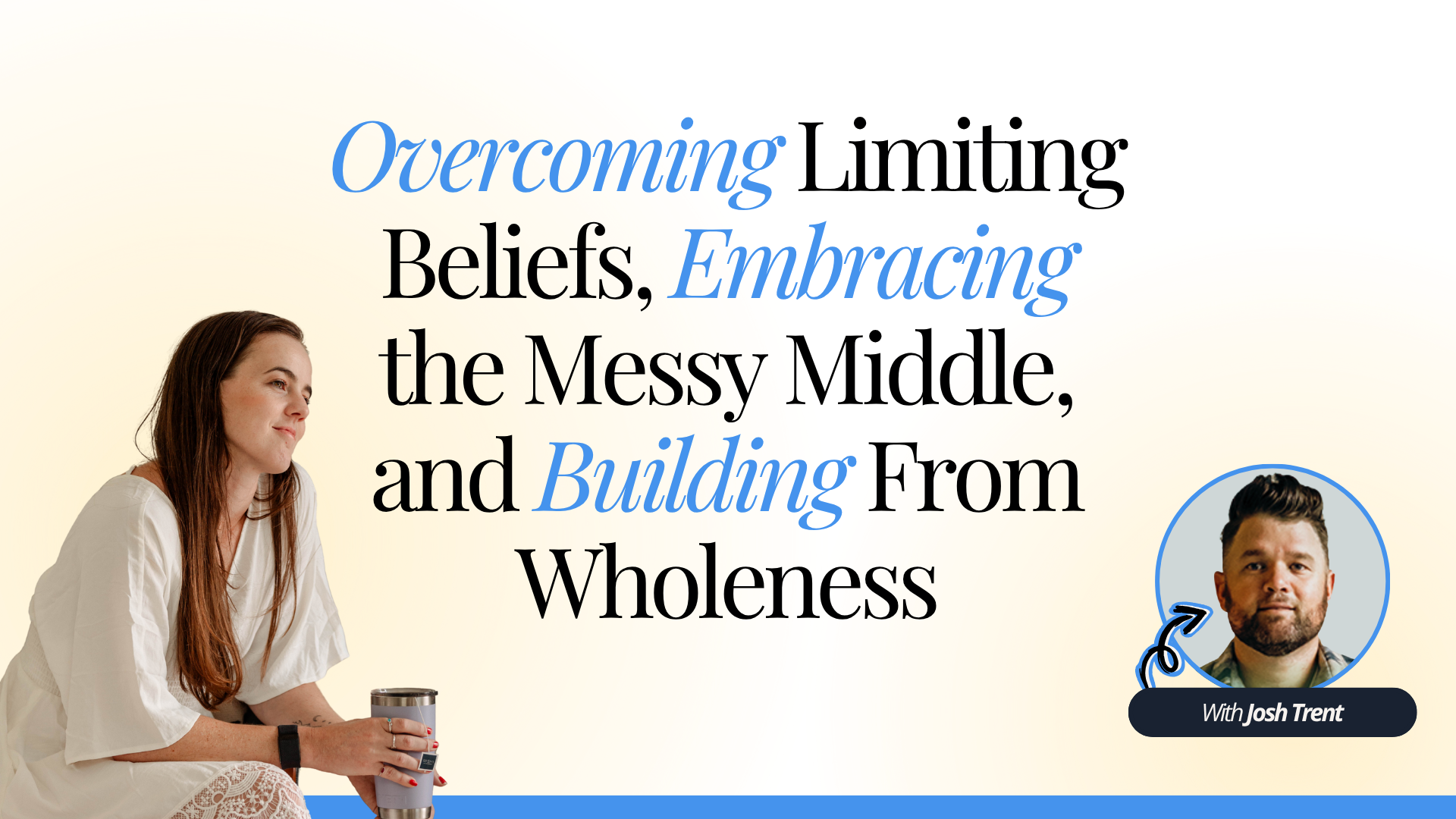
In this episode, Josh Trent shares the Pentagon of Wellness that fuels sustainable success, why there are no shortcuts, and the three-phase arc that most entrepreneurs skip—lengthening their own pain curve in the process.
Key Takeaways
- Your bank account is a mirror—what it’s actually reflecting and why most entrepreneurs miss this completely
- The phase everyone skips—why going from gather to embody without the messy middle guarantees you’ll lengthen your pain curve
- Business is 100% spiritual—how identity transformation unlocks everything else (funnels, systems, strategy), and the identity alchemy process that allows leaders to scale sustainably
Connect with Josh Trent:
Instagram: @joshtrentofficial
Podcast: Wellness + Wisdom
Website: wellnessforce.com
__________________________________
More ways Embodied Marketing can support you:
If you’re ready to hand off your entire marketing strategy (from funnels to ads to copy) and finally get the expert team you can trust, apply here and let’s talk: helpmystrategy.com
WANT TO WORK WITH TEAM EMBODIED MARKETING?
Honestly, we’re more than a marketing team — we’re a tactical partner who will care about your business growth just as much as YOU (maybe even more)!
We’re here to play the long game and help you create a powerful impact!
SUBSCRIBE & REVIEW THE PODCAST!
Thanks for tuning into this week’s episode of the Embodied Podcast! If this podcast has added value and helped you in your business journey, please head over to Apple Podcast, subscribe to the show, and leave us an honest review.
Your reviews and feedback will not only help us continue to deliver great, helpful content, but it will also help us reach even more amazing entrepreneurs just like you.
READ THE EPISODE TRANSCRIPT
Emily Hirsh: In today’s podcast episode, I was joined by Josh Trent, who is the founder of the Wellness and Wisdom Podcast.
Josh Trent: That’s what it means to be an entrepreneur is one he or she who takes risk.
Emily Hirsh: We had an incredible conversation that every single entrepreneur needs to listen to.
Josh Trent: No one’s going to give a shit about what you have to bring to the marketplace until you’re successful.
Emily Hirsh: Everything we talked about from actual, tangible ways to grow yourself and overcome those things that hold you back to being parents and integrating that
Josh Trent: it’s not the red light therapy, the sauna, the cold plunge, the workout, the meditation. All these things are good on top of a baseline of emotional inventory.
Without children, I don’t think I would’ve had or have the fuel source that I have Now.
Emily Hirsh: I know you guys are going to really enjoy this episode. Embodied CEOs don’t chase trends. They pave the way they lead from within. Move by purpose, unshaken by noise. When you are the source, you do not need permission.
All right. Welcome to the show. I am so excited for this.
Josh Trent: Same, same.
Emily Hirsh: Yeah. Thank you so much. Let’s dive in. I would love for you to share a little bit about you to start and wherever you feel is relevant to dive into your story as an entrepreneur and where you are today.
Josh Trent: I love the term entrepreneur. Yeah.
’cause I believe that etymology is risk, one who takes risk, and I found that nothing in my life, no matter what category, I have to, I get to take risk if I want to get some type of reward or fruit. So that’s like the genesis essentially for my whole life. I was born in East County La Mesa, which if nobody knows that area, it’s like geriatric ward with like the occasional hookup culture.
And I was born to a mom that has still struggles with a manic bipolar disease. My dad left home when I was two months old. So it was like what Aristotle talks about, you know, nature of bores a vacuum. So there was a really big vacuum that was created in the initial stages of my life that if I’m being honest with you, to talk about embodiment.
Since we’re on this podcast that has embodiment in the name, the only way that I can truly embody an entrepreneur energy spirit and be a spirit preneur is to take stock and take grace of all the things in my life that were traumatic. AKA stuck energy. Energy is energy in motion. Emotion. The only way I can be a successful entrepreneur and like, look at my story that I could share with you right now.
From a lens of empowerment would be to take an inventory of everything that’s happened and how has it happened. For me, it’s not just some intellectual thing for me, it’s like from in my heart, in my gut, the embodiment of me being an entrepreneur started probably when I was in utero with my mom. You know, she was very stressed out dealing with mental health issues.
I came out, which I then found out later in my life, when a mother is going through stress, the fetus, the unborn child gets pre-wired for hypervigilance. There’s even some data that shows that there’ll be sexual issues with the child, which definitely happened with me. I struggled with pornography addiction for multiple decades.
I was a womanizer, and it wasn’t until my early thirties that I really had a dark night of the soul moment. But that’s what it means to be an entrepreneur is one he or she who takes risk and he or she that is willing to look at the entire page of their life. Take ownership and take real accountability that they were the creator of it all and that they are not the victim of anything.
They are the victor of the story, that they choose to write from the events that happened for them. ’cause inherently, all events are neutral, which took me a long time to gr
Emily Hirsh: Yeah. You are speaking my language. I, I love that. Like we are the creative of our life for sure. Yeah.
Josh Trent: Yeah.
Emily Hirsh: And the moment you realize that everything changes ’cause you’re like, it’s all right away.
It’s all up to me.
Josh Trent: But then the person you become to get to that choice point. See it’s interesting in marketing, ’cause everybody wants like the five things that’ll do the thing. Five ways to make money, five ways to be, you know, an embodied CEO. I don’t know, hopefully you haven’t put that out. But I just find that we’re all looking for the shortcut.
And the shortcut is that there’s no shortcut. The only shortcut that you take will always turn into a long cut. There is no shortcuts. And I learned that the hard way.
Emily Hirsh: Totally. Well, and it’s about the process of getting there, like you’re saying, versus the actual finish line is who you become in the process.
For sure.
Josh Trent: We’re all going through identity transformation. I mean, I’m wearing a necklace today that is the philosopher stone. And the philosopher stone was the ancient mystics and the alchemist who would turn base metals into gold. And young Carl Young looked at the philosopher stone as the journey from lower wounded self or victimized self.
Unintegrated self to a whole and complete self, a higher self. So I’m wearing this today because I think every CEO or any embodied leader in any business field has to live their life. They, they, they get to live their life from this space of what is my own transformation, of my own identity. That’ll allow me to take my business to the next level.
It has actually not much to do with funnels and systems and websites and strategy and relationships and strategic leveraging and blah, blah, blah. All that stuff’s important. But if the identity transformation isn’t the sole focus of the leader, then the business eventually will collapse. And I’ve seen this time and time again, and we see it in like the Ty Lopez stories or all the big like angry men that are pounding their fists on the table.
Eventually because of their lack of integration, their business will fail. They will get caught up in a Ponzi scheme, something will happen because they will leading their business from their ego, from their unintegrated portion of self.
Emily Hirsh: Yeah. Oh man. Like this is what I discovered myself and then transitioned my company because I was, you know, solely marketing for so long and then realized like this is like.
Just the tip of the iceberg, you know? Yeah, yeah. But still, most people don’t realize that that’s what they actually need. So I have to like, at my events, be like, come in for the marketing strategy, but I’m really gonna do breath work. Yeah. Like, we’re gonna do the real work. Yeah. And then of course, that’s always the most impactful work that we do
Josh Trent: always.
Emily Hirsh: But people don’t think they need it. A lot of times, I think once you experience it, then you kind of get like really committed to it, realizing, yeah. That, that’s like the, the thing that stops you every single time is yourself. So the more you work on yourself and the, and the deeper you’re willing to go, the bigger your business grows in your life and all those things.
That’s been my experience. But getting others to understand that is sometimes people don’t, people still want the marketing and the, the five things.
Josh Trent: It’s interesting. I, I said five, maybe it’s because of my own unconscious conditioning. I, I teach a model in the Life Method, which is my main program and in emotional epigenetics, which is a branch of study that I created and I based it off of like 800 episodes that I’ve done.
And in all my teachings, I always reference this wellness Pentagon, and I have to give credit to a mentor of mine. Paul Check he, he taught me about the wellness quadrant, which was mental, emotional, physical, and spiritual. Well, I had it on financial because for me, financial was always a deep wound in my life, and until I started to see money as energy and that it was a spiritual component to the rest of the sides of self, I really struggled for a long time.
And so I have this Pentagon that I teach, which is these five sides of self. And what I find, I, I know you might feel this too, when we go to Nourish one of these five sides of self that I’ve mentioned. What we meet against is our own beliefs that we’ve either inherited from those that loved us, or that we self-created because of neutral events that were traumatic, that stuck energy or energy and motion in our neural tree.
In other words, it’s all created by self. We’re all the creator of our own limitations yet. We meet these stories of limitation when we go to nourish the parts of ourselves, these five parts that paradoxically will also be the fuel source for our business. So it’s, what I’m saying is it’s all one and the same.
Right? It’s the law of correspondence that the Hermetics teaches, right. As above, so below. It’s not just a platitude on social media, it’s real, it’s palpable. It’s, it’s our life. And we unfortunately can get really duped and pulled out of the beauty and the sacred truth of it all if we are so caught up in intellectualism that we forget to embody the lessons that are being brought forth to us.
Emily Hirsh: Yeah. I remember that you studied under Paul Check, which is like a, that my husband did, you know, six years under Paul check. Wow. And he’s like a
Josh Trent: Yeah. Oh.
Emily Hirsh: Like if you studied under him, you go deep.
Josh Trent: He’s the Jack l of wellness, like he created, but not a wellness a people know
Emily Hirsh: about him. Like I feel like he should be more mainstream, but it’s like, when you know about him, you, you’ve gone really deep
Josh Trent: Sure.
With, with your knowledge. I agree. Yeah. Will you
Emily Hirsh: tell us about your, your Pentagon, the five things?
Josh Trent: Yeah. So imagine, I wish I had a, a logo in front of me, but imagine a Pentagon. So the floor of the Pentagon is our physical nourishment. The walls of the Pentagon is our mental and emotional self. So if I have a clear mind that’s able to receive and give information, ’cause that’s essentially the real goal of the brain, right?
The mind per se. I mean, obviously there’s the unconscious and conscious mind, so it’s, it’s a lot more fed metaphysical than what I’m explaining. But just on a simplistic view, like 30,000 feet in the sky. The why the model I teach is so near and dear to my heart is because I learned that if my floor has holes in it, then everything else falls through it.
All the other four sides of self fall through the physical, the mental and emotional, are so important as well, because we’re a soul and a body experiencing life. And to deny that would be to deny almost all metaphysical and religious teachings. And then if I have a clean emotional unit where I’m able to process emotion, which.
Honestly, one of my biggest learning curves in life has been to feel my enema and enemas inside of me, which is what Carl Young talked about, the polar opposite of masculine and feminine inside of both men and women. Our ability to access masculine and feminine energy that. Crucible for me as a man, and for a lot of men isn’t really something that happens until we go through massive breakdown, which I’m totally cool to talk about.
There’s been tons of breakdowns in my life that have been breakthroughs. But so anyways, if you have a clean emotional nourishment of self, then you’re able to process things quickly and they don’t suck your energy reserves, they don’t make you have disease. Right? Or the opposite of ease. And so the spiritual one is if you look at not just Aria Greece or Petaluma, California or Sardinia and Okinawa and all the different places in the world that are considered blue Zones, it wasn’t the fact that they ate healthy and that they were socialized.
It’s that they all had a spiritual connection to a creator. They all had some belief that they were part of a. Bigger, all that. They were connected to a creator or God in some way. And then the financial piece is really interesting because we’re here in the 3D world and it’s super fun on podcasts to talk metaphysical and go into the five D and all these things.
But when it really boils down to the truth of who you are, I, I really believe like if you show someone your bank account and their calendar, you will know exactly who they are for sure. Their bank account is a reflection of the personal work, the spiritual work, the emotional work, the physical work, the mental work that they’ve done on self.
Their bank account is a mirror of that. And so that’s the system and this pentagon, this, this nourishment of the five sides of self. And obviously it’s a lot more complicated than that, but the, the high level, the meta is as we go to nourish these five parts of, of us, all the stories, all the beliefs, all the inherited trauma, a k, a energy in motion.
Comes up to be healed. And that’s the most beautiful part of the work that I’m doing and why I am of service and the way I am. But I wanna say one thing, like I don’t need a medal for it. I don’t need recognition. I don’t need to be on a stage and have people go, oh my God, Josh is so cool. I’m just doing it because I know what the opposite of it feels like.
The opposite of wholeness, the opposite of feeling and, and giving and receiving love is so painful and I felt it when I was a little boy. I felt it throughout my whole life that I just wanna give people a pathway where they can find out what truth of love for themselves is. I think we’re all here to learn how to give and receive unconditional love first to ourselves, which is the hardest part, and then also to others, which is also another hard part.
So God made it really challenging on purpose so that God would experience unlimited ways where it would know itself.
Emily Hirsh: I love this. So how, like, how does this show up for you in your everyday life? For, you know, how do you embody these five things as a dad, an entrepreneur, husband? Do you like. Bring yourself to them, you know, on a regular basis.
And like, do check-ins. Like what’s, what’s, what’s the tactical, I know it’s hard to bring tactical every day, those type of things day, but like, what does look like in your life embodying this?
Josh Trent: I think it looks like, and getting hit in the face with a waterfall. You, you, I think it looks like you wake up in the morning and you get hit in the face with a waterfall.
That’s, that’s what that’s saying. You know this, you’re a mom. So children are the greatest gift that I’ve ever received in my life. Like, full stop. No ambiguity, like without children. I don’t think I would’ve had or have the fuel source that I have now. I wouldn’t be doing what I’m doing or I would be doing it, but it would be in a very self-serving way.
Emily Hirsh: Tell me a little about that. Like what would tell me about becoming a dad and then, and that experience
Josh Trent: when I was single, and actually this is. Since we’re talking about Paul Check in 2019, I was speaking at this event in Austin called Paleo fx, and it was like I was
Emily Hirsh: probably there. You were probably there.
Yeah. And it was
Josh Trent: like this beautiful movement that now got replaced by Tim Gray’s event. But I remember that I went on Paul Check’s podcast and at that time it was called Living in four D. And he looks right at me in like the middle of the episode and he is like, well, what do you really want? What do you really want?
And I said, I want marriage and children and I want a family. And he is like, okay, repeat after me. And I got like chills. And he said, bless me that I choose my life’s companion according to the laws of Perfect Soul Union. This is Parma Parma Hasa Yogananda’s Prayer. The Soulmate prayer. And a week later I met my now wife in Sedona.
’cause I just recited that prayer with him twice on his podcast. There’s no disconnection from that event to me meeting her a week later because I was ready. I was. I was mentally, physically, emotionally, spiritually, not financially, but the other four, I was ready to meet my wife. And so what does it look like to embody these five aspects of self?
It looks like being really humble and asking God for what is it that I most get to learn and how can I be most humble to learn it? If there was just one lens that you could use as a meta on the other five aspects of the other lens, it would be that one prayer, that one question, super simple. Simple does not mean it’s going to be easy, but that that would be the answer.
I mean, there’s many, many other ways tactically to go into each one of them. But just on a very simple way to understand it and to really, really grock it, not just in my mind, but in my heart and in my soul. Can I ask God, can I be humble enough to ask what is it that I’m most get to learn and how can I be most humble to learn it as a prayer, as a, as a living, walking, breathing prayer?
And then the answers will come, and the answers may not be what I or we want to hear, but the answers are true regardless. And then from those answers yields the work that we get to do so that we can let go of these limitations and these inherited emotional patterns from our lineage. I mean, if you look at the Native American seventh Generation principle, which is profound when you and I.
Heal a part of our psyche or heal a part of our way of being that’s not loving, that’s not nourishing to self or other. It sends a ripple throughout time, back seven generations and forward seven generations. So it’s a huge responsibility to be a parent because every way that we choose to love ourselves and love our children and love our husband or wife, it is going to ripple forth seven lifetimes.
I mean, like the hair on my arm is standing up. Just saying that to you, it’s such a profound responsibility and the only way to really handle that responsibility is to be humble and to ask what is it that I most get to learn? That’s really it. Yeah. That’s the codes.
Emily Hirsh: It’s so true and, and like you’re saying, it is simple, but usually not easy or usually not what we think it should be, or we want it to be
Josh Trent: rarely, rarely, ever.
Yeah,
Emily Hirsh: the unknown. Yeah, the unknown.
Josh Trent: Sure. Yeah.
Emily Hirsh: So that experience of becoming a dad, like who kind of, where were you in your life then? And you said that you don’t think you would basically be here today if you didn’t have that. Tell me more about that.
Josh Trent: In 2019, I was still in debt. I was still addicted to pornography.
I was still not necessarily womanizing per se ’cause I had taken a look at that. But I was saying one thing on my podcast, which I actually burned that podcast to the ground, and that’s where wellness and Wisdom came from a few years later, by the wisdom and intuition of my wife, by the way, which was amazing.
And so where I was, was still in denial, still in denial about the truth of my life, the, the fruit of what I have created. And so it wasn’t in until from 2019 to 2022. 2022 is when I changed the name of the podcast. I went through this three year crystals, you know, like the caterpillar becomes the butterfly.
And this liquification process of really being honest with all that I had created was very challenging. But my son was born in 2021, so we. Chil, we had a child right away. Basically I met her, got pregnant very quickly and then missed out on that kind of friendship zone that most marriages have. And so that’s been a unique challenge as well.
’cause we, we really didn’t have that friend time to build memories on, like, some people, they’ll take trips and they’ll hang out for multiple years before they get married. And so my marriage and my experience of fatherhood has been putting a boat in the water and building it while it’s floating, instead of having the boat all built and then putting it in the water.
Emily Hirsh: That was my, that’s my experience too. Yeah. Yeah. That’s,
Josh Trent: that’s been, that’s been it.
Emily Hirsh: Yeah. And you have to, it’s like you put, you build the boat while it’s in the water and you’re figuring yourself out. In the middle of sometimes bailing the water out. Lucky
Josh Trent: just being like, let me plug this hole. Forget about the sale.
Emily Hirsh: Yeah. Let
Josh Trent: me just plug this hole real quick.
Emily Hirsh: Yeah. That was my, I mean, I had my kid at 20, so I was for sure not ready. No, I can’t even imagine having a
Josh Trent: child at 20.
Emily Hirsh: Yeah. But it’s my path. You know what an
Josh Trent: immediate maturity bringer.
Emily Hirsh: Yeah.
Josh Trent: There, there, there ain’t nothing in this world that’ll mature you if you’re open to it faster than being a mom or a dad.
Emily Hirsh: For sure.
Josh Trent: Yeah.
Emily Hirsh: And, and realizing it’s not all about you. Like from that moment on, it’s, it’s like, oh, the, the healing and the work now, it’s like you’re saying so much more important. Yeah. Because it’s not just about my life. That’s right. It’s like that’s what I’m passing on Yes. To, to them. But I, I. I went through like a lot of shame around that decision or that, not that decision, but just that, that was my life path.
And someone said something to me on this podcast of like, what if your kids chose to come into this life because you were gonna be a young mom and, you know, build a business and pursue all these things. Like, that’s what their soul wanted. Mm-hmm. And that really was helpful for me. Mm-hmm. To be like, oh, it’s not, you know, ’cause I struggle with like, I have my business and being a mom and being young and trying, you know, just navigating all the things and it’s like, no, my kids needed that.
Their soul actually chose that and that, that, I think about that a lot now.
Josh Trent: I think that’s really empowering and. Someone could either take that in as truth or not. I’m not here to, no, I mean, none of this is telling y’all how to think, by the way, or how to be, I’m just sharing what I believe to be true.
But I will say that when you’re 20 and you’re young, if you look back on history, the median age of when women and men brought children into the world was inherently younger than it is now. Most women are waiting. I think a lot of that has been through unfortunate programming of like red pill and feminism, fifth way feminism specifically, and really an attack on the family and an attack on, I guess you could say, God or spirituality.
That’s a real thing. So we can’t ignore that. But I, I think having children younger was actually normal. And it was actually how people went through their rite of passage. You know, women when they’re a certain age, like the LA Latin culture, has the quinceanera when the woman starts her bleed, right? And that’ll be her stepping into womanhood for men.
If you look at most cultures, the rite of passage was to put ’em in the forest and starve ’em and cover ’em with ants and make ’em feel like they were gonna die. So they came back a man, and most men don’t ever have that. Most men never have a rite of passage. I didn’t. I never had it. So I had to create it for myself.
In my late thirties, early forties, I went out and did a vision quest twice and starved myself and fast it for four days, and went through that to then bring back a more mature lens of fatherhood, and even of husbandry too. And so I really think that it’s a beautiful thing that people have children early.
I think it’s a natural thing that people have children early, and I would recommend that most people do. If you feel like you wanna be a mom or a dad, do it as early as possible. Now, that is one regret. Not a regret from shame. I’m not shaming myself, but the regret is, gosh, if I could go back and give myself a little card of wisdom and just put it in my pocket when I was like 18 to 21, I think I would’ve had 10 less years of suffering in the way that I did.
I really mean that. A lot of people like think it’s sexy to say, no regrets. Regrets don’t have to own you. It’s not an emotional burden that I carry because it’s a regret. A regret is just part of an honesty process of taking stock of one’s life. Like, yeah, I actually regret that it happened and I can create a story that’s meaningful.
That all happens for a reason.
Emily Hirsh: Yeah. You don’t become a victim to, to the regret and
Josh Trent: Exactly. But have kids early.
Emily Hirsh: Yeah. Yeah, yeah. I mean, but you’re like, the society is so against it, I’ll tell you. Oh yeah. Like it was, you know, I, and I grew up in California where it was like, you’re keeping the baby like that was.
Everyone around me was like that. You shouldn’t.
Josh Trent: Right. You
Emily Hirsh: know, and yeah, it was, I mean, it was the most challenging thing, but I, I 100% look back on it as like that was what I was supposed to, that was my path.
Josh Trent: Yeah.
Emily Hirsh: And I’m so, I mean, I wouldn’t even have my business if it wasn’t for becoming a mom young and coming up with a way to make money.
And, you know, it always works out that way. But yeah, it was, it was there. There was a lot of shame because of this, the message from society and it’s like, then you prove yourself successful and now everybody roots you on. But when you’re not quite successful yet making money, you don’t have many supporters.
Josh Trent: Can I share a brutal truth?
Emily Hirsh: Yeah.
Josh Trent: No one’s going to give a shit about what you have to bring to the marketplace until you’re successful. They don’t care. And quite frankly, they don’t have to. We are the ones that yeah, that must believe what we’re putting out into the world has value, has meaning, has service.
If we don’t believe it, which is by the way, the whole identity alchem process, we have to believe it in our, in our heart, in our soul. Then people feel that from us. It’s, it’s the etheric field, it’s the quantum field. When you put a offering out into the world, whether it’s $2 or $20,000, if you believe in your heart and soul that they’re gonna get so much more than just the energy exchange of money they’re giving you, you will never fail.
Failure won’t even be in your lexicon. It, it’ll just be who you are. And that’s what people are paying for, especially in the age of ai. They’re paying for who you are. They’re paying for the truth of who you actually are and not pretending to be someone else. People want that because they’re struggling with that.
Anybody that’s in business that wants something from a leader or. Wants to be more embodied. It’s because they’re on the journey of embodiment. I have this arc that I’ve just come to know as truth is like we, we go through three phases. As an entrepreneur, we gather, which is like podcasts and conferences and lectures and PDFs and all.
We gather it all, then we apply it, we, we put on the sweater to quote a friend of mine, Rob Wolf, and we see if it itches. We go through the practices, we build the funnels. We meet ourselves, we meet our stories. And then lastly, we do the work of embodiment. But here’s what happens is that we want to go from gather to embodiment and we, we skip the most important phase, which is being in the chrysalis, being in the identity alchemy process.
And when we skip that, we actually delay our success. We, we. Lengthen the pain curve. The pain curve becomes much larger because we’re actually resisting the application process of what I call the arc of wellness. But the arc of wellness could be applied to business as well. So when we gather, we apply and we embody each phase of that is so powerful and so meaningful.
That to skip any of it would be just a lengthening of the pain and a lengthening of the time that we have to go through before we believe what we’re putting out in the world is worthy because we know we’re worthy. It’s a spiritual process. Business is 100% spiritual. Oh yeah. All the funnels and all the systems, they all come after the fact, even the graphic, I remember when I was figuring out my podcast, I was like tripping out on the, I’m like, the graphic has to be perfect.
And I was running from the application, I was running from the application of, of actually doing the work. And getting such. And that
Emily Hirsh: application process is messy. Like, and it’s not fun. And I think it’s supposed to be, and it totally, it’s a process. And I would even say, I love how you put that. I would even say like, when you wanna go to a new layer in business, you restart sometimes and you go back to, you burn it off to the ground and or you build off of what you have, right?
Or you build. But I’m like, I, I think like once you make it to that phase of embodiment, you’re not there forever. At least in my experience. Like there’s phases of my business where I’ve had to pivot or I’ve changed a ton. Or shift something you like when you’re starting, you know, redo, starting your podcast like you did, you’re back at gather and then you go through the steps again.
Yeah,
Josh Trent: yeah. And
Emily Hirsh: I think sometimes we expect, oh, once I’ve gotten to the embodiment phase, like I’ll be there forever. But sometimes you go back to gather and have to do the work and put that in and, and I also think there’s a lot of people who look up to entrepreneurs or. Public figures who are in the embodiment phase and they don’t realize all that it took to get
Josh Trent: Oh, yeah.
There,
Emily Hirsh: you know, there’s, oh yeah.
Josh Trent: There’s
Emily Hirsh: so much in the entrepreneur space. I think our, the pendulum has swung from like hustle and grind to like, I don’t wanna work and I want everything to be easy. There’s so much focus on nervous system, which is important, but I sometimes feel like people are missing, like, it’s not supposed to be just sit around and, and on your couch and it’s easy manifest.
You’re not stressed, like,
Josh Trent: yeah.
Emily Hirsh: What I’ve learned around, around nervous system and. Not burning out. It’s all about how you do it. It’s not what you do and how hard you work. And, and you know, I look at some of, I really look up to, I’ve been to going to Joe Dispen events and I look up to how he runs these huge events and he’s like 60 something and just like massive impact.
And it is like, he’s working all the time, you know, but he’s super present and it’s how he does it and how he embodies it. So it’s not even about, we obsess over the what and the steps and like, what does Josh do every day and what is, you know, this person I look up to and I’m gonna copy that. And it’s, I have been learning, it’s more about the how.
And I think we ch, we chase like this lie that life’s supposed to be super easy and we’re supposed to be just happy all the time. And like life is supposed to be, we gotta apply yourself and struggle and go through the discomfort.
Josh Trent: This is such a great, it’s like this inflection point where there’s, there’s a camp in entrepreneurship that says if it’s not in flow, you’re on the wrong path.
I say, no. I say bullshit. And then there’s another camp where it says, you have to struggle. You have to grind. You have to hustle like the Gary Vaynerchuk. And I don’t agree with that either. I think there’s a middle way, and this is talked about in the Da de Ching and one of the best quotes I’ve ever heard, and I’m by no means like a, a philosophical or religious master in this realm, but I’m just quoting something I love from the Dao and it says, the Dao loves and nourishes all things, but it does not Lord it over them, which I really love, because if, if I’m loving and nourishing all things, then that means I’m actually learning how to love the pain of my own entrepreneurial growth, and I’m not lording it over anyone.
So I’m not saying that because I’m Joe Dispenza or because I’m Josh Tran, or I don’t know because I’m Emily. Right? Like, it doesn’t mean that you get to speak from a pulpit and say, well, look at all the pain I’ve gone through, therefore I’m going to Lord this over you. I think that’s a really interesting point to focus on right now, because yes, in the entrepreneurial journey, you’re, you’re going to inherently experience pain.
Like transformation is not a painless process. It’s a painful process. Yes. And it doesn’t have to be fully painful either. There can be beautiful joy and acceptance and grace, and courage and love in the entrepreneurial journey. But you know, to quote Dr. Hawkins, who I also love, he developed a frequency scale.
He was an MD PhD for 40 years and he developed this measurement scale of hurts and entrepreneurs really must get this. This is something entrepreneurs have to understand. The lowest frequency we can ever feel as a human being is 20 hertz and it’s shame. The highest frequency we can ever feel is enlightenment and that calibrates at a thousand.
But right at about 1 75, there’s something that maybe you’ve struggled with. Maybe I, I had. I definitely have not. Maybe. And that we all, as entrepreneurs struggle with 1 75 calibration is pride. And right above pride, if we can go 1 75 to 200, there’s courage. And then above that is acceptance. Acceptance and willingness and love and being of service.
All of us want to skip the 20 to the 1 75, and we want to go right to 200 and to the higher frequencies. We can’t skip them. This is what I’m saying. We cannot skip them. We listen to a podcast, we go to an event, we read a book, and we dupe ourselves intellectually that we can kind of skip all the lower frequencies and not feel them and not learn how to embody them and process them.
And then we just fast forward to like, it’s all love, brother. Yeah. If it doesn’t feel good, don’t do it. That is a way to derail your growth and to literally torch your business if you don’t have an understanding of how to process these lower field survival paradigm emotions. And that’s honestly a big part of what I’m creating for 2026, is the life method where I’ve actually systematized the way for people to authentically get this in their body for themselves.
Like people that have been stuck in three big areas. And I find, I don’t know how you feel, but I find that these three areas are the, are the places that epigenetically, intergenerationally, we all are bio energetically burdened from, and I believe it’s emotional patterns. It’s inherited beliefs and it’s our environment.
And when we can start really looking at these three areas and understanding not, not why things happened, but that things happened. This is a really big piece for entrepreneurs. It’s not you, you, you’re never gonna get the spiritual answer if you’re asking it from a mental frame. If I’m pounding my fist on the table and going, well, why did this happen?
Why did this happen? Instead of just being curious too that it happened, that’s when emotional epigenetics can really be powerful. You can transform your life in like two to three months. I swear it’s not easy. I’m not saying this is some panacea where it’s like your whole life will change and it’ll be effortless in a few months.
No, it’ll be really hard, but, but I’ve created a system to walk people through that so that not only can they show up and be who they want to be, but that they’re not held hostage by these burdens. Because we’re all burdened. All of us are burdened. But the key is that we are not broken. We’re not broken beings.
We’ve been trained by modernity to, to feel like we’re broken, but it’s just a way for us to be monetized. Yeah. That’s inherently it.
Emily Hirsh: I love that. I’m excited for that to come out. I, I, me
Josh Trent: too. It’s been 10 years of my life, y’all.
Emily Hirsh: Yeah. So much wisdom in that. I’m ready. I think one thing I’ve learned through a lot of what you’re talking about is how much happens in the like small micro moments.
Like I’m a very, like, go to the event and like do the big thing and all in, and I, which is important. I’ve, I’ve learned which Yes. I mean, that’s part of the process. Sure, sure. But especially recently, I’ve learned like, it, it’s these things where you’re, you’re trying to get out of just like. Your head and into your heart.
It’s like these small shifts, small dial turns. It’s not this like overnight thing or I’m gonna meditate in the morning. It’s like, no, I have to do it all day. That’s why it’s hard. It’s like a hundred times a day. Yeah. I have to bring myself back to that and like literally retrain myself. So that’s been a recent thing for me.
It’s like I, I was, two weeks ago, I was like. I have a great morning meditation practice, and I’m like, what if I made my whole day a meditation practice, like as many times as I can, just back to the present moment, into my heart, outta my head, because I can sometimes, I mean, the subconscious is so powerful that I can trick myself and be like, no, this is my, this is your heart, you know?
Taught me. Yeah. And like, no, that’s your brain again, you know, jumping in and telling you what to do. And so it’s, I think why, for me it’s so hard is because it’s so sneaky. Sure. And, and you, you can convince yourself you’re not controlling and you’re surrendering and you’re, and you’re accepting. And then it’s like, Nope, you’re actually not.
Josh Trent: Yeah. That there, there is a drunkenness that scientism promotes. Scientism is just like another religion. I feel like now, especially with the whole craziness we went through in 2020. Trust the science, what a religion that was. For people that don’t know, like that’s a religion. When you’re saying trust the science and this intellectual drunkenness that we’ve all been sipping on, it’s not our fault.
We were conditioned. And I, I do believe it goes back more than seven generations, this science as a religion, and unfortunately this illusionary war. ’cause honestly, Emily, it’s a, it’s a illusion. It’s an illusion that science and spirit are not one and the same. It really is. I just want people to understand that, like whether you’re an entrepreneur or not, for you to clench your fist and put it in the air and say trust the science is the same thing as you speaking in tongues in a Christian audience.
It’s the same way of being. And so what I think we’re really starting to understand, especially now. Even with a podcast like this is that the only way forward is to be integrated, and to be integrated means that you are resilient to Modernity’s hooks coming in and trying to monetize or weaponize your insecurities.
That’s really the way forward is to be so whole and so loving of self that we are not able to be fucked with and to be pulled into, well, a woman’s worth is only her beauty. A man’s value is only the numbers in his bank account. If you’re not providing, you’re worthless. If you’re a mom and you’re not doing these five things and you don’t look this way, then you’re worthless.
All of that, all of that, all of that has been created to control people and to weaponize people’s insecurities so that then their dollars can be monetized based on that same insecurity. But once you know it, you can’t unknow it. Once one, like, I’m so happy that I’m telling this. Once you see it for what it really is, you will never be able to fall back into that trap ever again.
And this is the power of entrepreneurship, is you, you learn how to inherently share value with the world and give value to the world. Not because you need a medal for doing it, but because you care so deeply about what you’re doing, that you don’t want to weaponize or monetize people’s insecurities.
You actually want to share with them how to not fall into that trap, which I think is the, the next level for entrepreneurs in the world.
Emily Hirsh: I love this so much. And, and you said kind of the foundation of that, not kind of it is, is the self love and love yourself and come from that place of wholeness, I think to be able to, to then come from that place of wholeness and not let those things weaponize you.
Josh Trent: Yes.
Emily Hirsh: My question is how do people do that?
Josh Trent: Yeah. Hmm. I wish I had some Pia and what,
Emily Hirsh: what is your experience when that, you know, because like I would be like, yeah, it’s a great question. It’s a great question. I’ve, I’ve come a long way with that, but I’m still on the journey of that. Me too. You know, and I think I forever will be.
But like, what have been the, the moments that have made the most impact on your own self love and, and coming from that place of, of wholeness? I
Josh Trent: like to speak in metaphor ’cause we all love stories. So imagine that you are a garden, like Emily is a garden. Can I use you as a subject? Yeah. Okay. So if Emily is a garden, then she’s got these beautiful roses and she’s got some pumpkins and squash and strawberries.
She’s got all this fruit that she’s bringing to the world. But occasionally when Emily goes into her garden, she’s gonna see some weeds growing. She’s gonna see some bamboo shooting up like invasive plants that if not tended to, will suck the life force energy away from her yield from her fruit. And so if she can just be mindful to tend to her garden on an ongoing basis through all four seasons and each season, if you look at the Native American culture, has its own blessing, has its own way of being that’s in harmony with nature, that’s in harmony with life itself.
And it’s not just the Native Americans. It’s also a book that I read called Outwitting the Devil by Napoleon Hill, one of my favorite books. And essentially the, the summation of what he was describing when he asked the devil, he said, what is wisdom? The devil said that wisdom is your way of harmonizing with yourself and the world so that you can be with other people to achieve a shared goal in harmony together on the way to its fulfillment.
I paraphrased it, but that’s the meaning of it all. And so if you, if Emily can tend to her garden. From a place of harmony, from a place of not wanting to take from others, but really just cleaning out herself, then more fruit will grow. More abundance will come as a natural byproduct, not in the striving for Emily to to say to herself, I must grow more fruit.
Rah. That energy will just make more weeds grow. The only energy that’s gonna make a bountiful harvest all through all four seasons is for Emily to be in alignment with these four seasons of herself. And just to be honest about what weeds are growing up in her garden. Where is resentment growing as a weed?
Where is anger growing as a weed? Where is grief growing as bamboo grief is a really hard one. And then honestly, where is learned helplessness Growing? Learned helplessness is like you know the trees in NorCal, they get these black bugs, like bug infestations that kill the trees. I think learned helplessness, which is.
Essentially a form of apathy, and I think apathy vibrates at about 50 learned helplessness is a trap that every single entrepreneur or soul can fall into. It’s just part of the process. And learned helplessness comes from emotional epigenetics and this intergenerational unconscious beliefs that are passed on.
I think I actually, I feel it’s not even that. I think I have a feeling, I have a knowing that as I tend to my garden and as you tend to your garden, if we can just be honest every day to notice what’s growing in the garden, then we can just pluck it out before it gets too big. But if we wait too long, like for me it was pornography addiction.
I waited so long to be honest about it. Now it’s my mother wound. I waited so long to be honest about it. Right now it’s just a lot of work in a short amount of time to rip it out by the roots. Then to be honest about when I see little buds growing back again, but this is the caveat and I’ll finish here.
When you tend to your garden, like when Emily or Josh tends to the garden, it’s not about tending to the garden out of fear of what’s growing. It’s just tending to the garden out of truth of what’s growing. And if we can pull the weeds as they come up in truth, like a fight with your husband, an ordeal with your kids where you may have slipped and got angry, something in business where you could have treated it differently, just constantly, constantly, constantly tending to your garden.
That is how you love yourself. That is how you show up clean and healthy and whole, and not be weaponized by a society. Society is built on telling people to not pay attention to their garden. Look at how many women right now are celebrating divorce on Instagram. They’re not just like. Saying, I got divorced.
They’re saying, yeah, bitches. I mean, even the way they speak is very harmful. Yeah. My bitches, I’m a boss, babe. Bitch, I’m proud that I got divorced. ’cause f him and this is rampant. And then you see it on the red pill side. Women are crazy. A women will only be associated with her feelings. Just this, this absolute insanity where the puppeteers are pulling their strings.
And if we’re not careful, we can start falling into these camps to validate our emotions that haven’t been processed yet. So what is, what is the goal? What are we really doing here on planet Earth? We first have the awareness that we are a garden and I, I’m a garden. You’re a garden. And if we can just tend to the plants in the garden like a loving gardener would, then that’s our life’s work.
I don’t think it ever gets easier. I just think we get smarter. I think we get more intelligent and faster, I think. And faster and faster.
Emily Hirsh: Pulling the weeds. Yeah. So
Josh Trent: that’s the analogy is really the garden.
Emily Hirsh: I love that. And what I, what I was gonna say with my experience is really just like acceptance being such a huge piece, which is that like acceptance of Right.
Josh Trent: Of
Emily Hirsh: what is, and there’s a weed, the wes. Yeah. And that, let’s
Josh Trent: pull it,
Emily Hirsh: that, that was like pivotal for me to, to learn. ’cause I would try to, in a way that I thought was helpful, be like, well, I don’t want to feel the anger or these quote negative sides of me because I want to be this great person and great mom.
Yeah. And it’s like the more you do that, the more you’re running from it, the more you’re trying to control and just. Making it worse. And so acceptance, I, it’s gotta be the first step. And then what you said of coming from a place of truth and not fear, like Exactly. Yeah. Not trying to run or hide. Like you first have to have that acceptance and then you’re able to not become it and let it consume your whole garden and can come from that place of love.
And the goal is not to never have weeds,
Josh Trent: right? Like you’re
Emily Hirsh: gonna always have weeds.
Josh Trent: You, you actually will. And
Emily Hirsh: that’s the point.
Josh Trent: Surrender, like surrendering to the fact that there is always going to be some type of weeds is really freedom
Emily Hirsh: and loving that. It’s like, that is right. That is what allows me to grow and, and peel back the layers and become this like, I can look back and say two weeks ago I wasn’t the same person because I’m so committed to my garden.
Yeah. And so committed to that every single day. And it’s in the little moments too, is what again I’ve been learning is like, it’s not the the one hour meditation practice, it’s the thousands of other moments throughout the day.
Josh Trent: Ooh, that’s so Can I speak to that? Yeah, that’s so good. You just said something that I really want people to feel.
It’s not the red light therapy, the sauna, the cold plunge, the workout, the meditation. All these things are good on top of a baseline of emotional inventory. If the emotional inventory, AKA, like going into the garden is not there, you could do, you could spend 20 grand on biohacking tools and business strategies and masterminds.
You could spend a hundred grand and you will feel in your body the same as when you started. And I think there will be no change. A lot
Emily Hirsh: of people do that, right?
Josh Trent: There’ll be no change.
Emily Hirsh: Yeah. I think a lot of people do that, right? Like, because it contemporary temporarily feel better. And this has been literally in the last two weeks, my realization is like life’s the ceremony.
Life is the meditation practice, like driving in the car, in, in the patio with my kids. Like those little moments that I could choose. Ignoring it, running, numbing out and going, my breath, let me just breathe for a sec. Like, and that’s what I’ve been doing the last two weeks and I’m like, this has changed my life more than any big event or big thing is, and I’m such a high achiever that I was the two hours a day, and I still do that, but like two hours a day meditation, all these things.
And it’s like, you can do all those things. Wow. That’s legit. And then you get up from your meditation. Yeah. And you’re, you haven’t changed.
Josh Trent: The garden’s still there, the garden,
Emily Hirsh: and you’re still run to meditated next
Josh Trent: to the garden, but you didn’t look at the garden. Yeah. It’s so simple.
Emily Hirsh: Yeah. It’s so simple.
But we, we want these like big, it is like you’re saying, you can go and hire the coaches and do all the things and, and they will help. But if you can’t integrate it into the everyday little tiny moments,
Josh Trent: the, a great coach doesn’t prune the garden for their client. A great coach just points them back to the garden.
But to know, to be a great coach. You and in any form of business or entrepreneurship, a really beautiful, like, awesome coach, all they do is just listen and feel with their client and they just put them back in the garden and say, all right, well what is this weed growing and why are you so afraid of it?
And how can I support you in pulling out this weed? That’s a great coach.
Emily Hirsh: And the garden is themselves, right? So a great coach just puts you back inward
Josh Trent: as long as the coach doesn’t project their garden onto their client’s garden.
Emily Hirsh: Right? Totally. Yeah. But I mean, anybody who’s trying to tell you the answer and the truth is outside of yourself is I’d run from that, you know?
Yeah. Like all I, I always tell people at my events, like everything I’m gonna tell you, you already know.
Josh Trent: Oh yeah. That’s so good. Right? And I’m
Emily Hirsh: just gonna remind you, like, I also think this whole journey is a remembering of what we already know.
Josh Trent: I’m with you. I was just at a mastermind and he said, you know, you guys like a lot of this isn’t learning new skills.
It’s just being reminded.
Emily Hirsh: Yeah. It’s actually perspective.
Josh Trent: The simplicity of that is so profound. We’re not, we’re not actually learning anything new. I mean, maybe sometimes we are. That’s not true. I don’t wanna speak in black and white. I would say most of the time we’re not learning new things like, like these, these beautiful pictures in the wall of your family.
You’re just remembering how to be a mom because in your epigenome there’s been thousands and hundreds of thousands of moms before you that brought you here. So you’re just remembering how to do it the same way that I’m remembering how to be honest, as a father, as a husband, we’re just remembering. And entrepreneurship, you know, I interviewed this guy named Tom Bilyeu.
He’s a big entrepreneur, and I asked him, I’m like, so why don’t you have kids? I like put him on the spot because I just wanted to know, I wasn’t trying to mess with him, I was just wanting to have like an honest conversation. And he is like, you know, the drive for me to be a father was almost enough to circumvent the drive for me to be an entrepreneur, but I couldn’t choose.
And so when I really sat with my honesty, I, I wanted to be an entrepreneur. I didn’t want to be a father and an entrepreneur. And I thought, interesting. Like I don’t have judgment for people that don’t want to have kids, but I think he’s missing out on a foundational piece of being a human being. I don’t wanna judge anyone and nor am I here to, I’m not judging anyone at all.
Right? If they, if they don’t want have kids, that’s their choice and has none of my business if somebody wants to have a child or not. But I will say inherently we are here to. Learn and to give lessons through lineage. So if he wants to be a father for millions of people on YouTube, beautiful, great.
That’s how he can do it. Right? Or a mom the same way. But I do believe that nothing can take place of being a parent. I don’t think it’s possible to have the same lessons on a visceral, somatic, unconscious journey unless you are bringing new life into the world as you care for the life that you’re holding in your own garden.
I just don’t think it’s possible. It’s not a judgment, it’s just an observation.
Emily Hirsh: I a hundred percent agree and I’m so big on like, you can have both.
Josh Trent: You can. That’s my answer
Emily Hirsh: to that course. I can’t. You have both.
Josh Trent: Of course. You can have both. I, I
Emily Hirsh: don’t, you know. I, I have it on my Instagram bio. You can have it all.
Like, that’s my thing. It’s like,
Josh Trent: yeah.
Emily Hirsh: I’m not letting anyone tell me like, you can’t do this or that.
Josh Trent: That’s right.
Emily Hirsh: Again, we’re the creator of our life and I think, yeah. The more you can tune all that out, the more you realize like it’s like the four minute mile. Once someone does it, then everybody does it.
Yeah. What’s your four minute mile? What are you going to go do that people haven’t done yet? Mm. Because you believe, like we were talking about earlier. Yeah. Your belief in yourself and the fact that you can do it is all you need to do literally anything. Mm-hmm. And I’ve shown myself that, you know, a question I wanna ask is, how do you navigate like consumption and social media?
Because I think for me, I told you yesterday, I, I deleted Instagram for a while because it’s hard for me. Like I gotta, I know in the seasons of tremendous growth, I have to tune the noise out because it can become so easy for me to use it to, in those moments where it’s like, why don’t you choose presence right now I’m choosing scrolling.
And I, and it’s so I can convince myself it’s for business and I’m not doing that and I’m just so aware that, that I am. So Do you have any like, limitations for yourself or awareness around your consumption as a creator in online business?
Josh Trent: Yeah, this is something I’ve been struggling with.
Emily Hirsh: I think a lot of people are,
Josh Trent: I, I think most people are.
Emily Hirsh: Yeah.
Josh Trent: If I were to guess, it’s like 90 to 95% of people. There are some people I had, I have a friend named Mark Grove and he took like a big break, I think it was six months or a year from social media, which is great. You know, I am stepping into a lot of curriculum development and so in order for me to be present to that, I’ve really been looking at this thing called the light phone.
And the light phone is just SMS and calls.
Emily Hirsh: I was gonna get that for my kids when they’re 13. Yeah, it’s just SMS
Josh Trent: and calls and I’m really, I I’ve, but there’s fear in me of like, well, what am I gonna miss out on? I’m not gonna miss out on a damn thing. I can just check social media for 10 minutes on a computer every day.
I don’t have to have a phone to do it. So that’s something I’m taking an honest look at. And just once I would say less than a month from now, hold me to this, less than a month from now. Because of the season of creation that I’m in, that I’ll have a light phone and that’ll be my primary thing. I’ll just switch it over to the light phone and I’ll have my iPhone in my studio and I’ll check the iPhone, but that’ll be it.
I’ll just check it like on a weekend. This is what my friend Mark does, and then for his day to day, it’ll just be text and SMS and his light phone. And we see this not just with light foam, but also a company called Daylight Computer, where they’re bringing back our ability to work outside on a computer where you have a keyboard and a really beautiful screen where you can work outside and it’s meant for being in the sun and it’s just clean.
There’s no like popups and it’s not distracting. I think we’re coming into this age of simplicity where the true entrepreneurs that create simplicity with like their phone and their laptop will be the ones that actually have the space to create in. Otherwise, you’re just going to add extra decision fatigue.
It’s just e extra cognitive load to your day because we really only get, I think it’s the Dunbar effect. We really only get about 150 decisions, high quality decisions. In our mental capacity each day. That’s what we’re built for. That’s why like Steve Jobs and even the founder of Meta Mark Zuckerberg were wears the same shirt every day.
’cause they don’t, they, they’re aware of this Dunbar effect that actually might be how many people you can have relationships with. I think it’s 150 people that you can have relationships with, but they’re one and the same. So if we get around 150 decisions and if we can really only manage 150 relationships when we go outside of that, we’re just loading ourselves and then we don’t have any space to create.
Emily Hirsh: Yeah, so we’re basically on the same page. ’cause I, yeah. Took all social off my phone and I’ve done this before. I went two months, my team locked me outta my social last year.
Josh Trent: Sweet.
Emily Hirsh: So that I couldn’t even go on the computer. ’cause I also wanted, I, I didn’t wanna care how many people liked the stupid posts.
Like just cut me off from it. And my creativity is always just through the roof. Like you forget. Yes. You get off of it and then you’re like, oh, this is what it feels like to not subconsciously pull it up in those white space moments. Mm-hmm. Mm-hmm. And I also think one of my biggest secrets to success is capacity.
Mental capacity. Yeah. Like what you’re saying. You know, I, all the time, I mean I have 18 employees and I’m like, they know if I’m ignoring you and not responding, it’s because it’s not priority for me today. Like
Josh Trent: yeah,
Emily Hirsh: I will get to it, but I am just radically. Protective over where my mental capacity goes.
And social media is one of those things where it’s, it’s easy to not even realize how much you’re doing it. Oh. And the noise and the impact like when you create, so I agree. I think we’re gonna go into an era of, of simplicity and people that are just so burnt out from this. And I think there’s a way to still create content.
’cause obviously there will always be the people who consume it. Yeah. Yeah. But if you wanna be a very high level creator and, and an entrepreneur like us, I think that you have to cut out a lot of the noise.
Josh Trent: Agreed. Yeah. ’cause that’s weeds of its own. So if our attention span is a garden, and that’s why I love this metaphor, then how could we possibly bear any fruit if all we’re doing is being in fear of weeds, which is essentially what notifications are, or what social media comments are.
They’re just weeds. They’re, they’re not, they’re not actually inherently of value. Unless you have like a 10 minute block of time that you just go respond to them authentically.
Emily Hirsh: Yeah. And you’re being intentional. But
Josh Trent: if you’re always at the response of notifications, then there’s actually not enough time to create in.
So then you just become a consumer, which is what I’m realizing more and more and more that I’ve been with social media specifically. And so then, okay, well what would a loving gardener do? They would buy a light phone, they would have a daylight. They would have systems in place to where they would only go on social media at a certain time, and they would hold themselves accountable to it.
Now, what we’d have to overcome with that is our variable reward, our limbic system is primed for reward. Right? And I know this from my addictions in my past. It was a spiritual process that I went through to heal addiction, but there was a mental understanding of why the addiction was there, and also a spiritual understanding too, the brain.
Is a really great servant, and it will seek out whatever the body needs to feel safe unconditionally. And when I say unconditionally, I mean it doesn’t matter what condition that it brings us. It’ll sabotage us. It’ll addict us. If a brain left unchecked without a spiritual wisdom to connect, brain, body will wreak havoc on your life.
I am living proof it will destroy your life. And so having a mental understanding of how the brain works is good. Having an emotional body that can be like, yeah, I don’t like how my garden looks. It doesn’t feel good in my, in my somatic intelligence, that when I look at my garden, and then to have the spiritual truth of like, all right, well what do we get to do today for the garden if we’re just running from the one piece instead of the three?
Good luck. Good luck having a healthy garden. It’s not gonna happen.
Emily Hirsh: Yeah. Because it’s just noise and it’s taking away from the real weeds that you need to be paying attention to. Or even the bamboo,
Josh Trent: which is like the most invasive species.
Emily Hirsh: Yeah. If
Josh Trent: you start getting bamboo in your garden, you gotta get that shut out quick.
Emily Hirsh: Yeah. As fast as you can. Yeah.
Josh Trent: Seriously.
Emily Hirsh: Last question I have maybe last question, who knows? But what are you seeing kind of today, we’re talking about it a little bit, but we haven’t talked about ai and just I’m curious your thoughts. I know you did a video the other day on Instagram when I was on social media.
I saw it. Just what do you feel like AI and today and the direction we’re going and, and kind of what’s gonna unfold?
Josh Trent: I think AI is just a huge global mirror of collectively who we actually are. And I think it’s actually a beautiful tool to reflect back who we are. AI is a really strong hammer. Like if you have a ha if we’re, if I’m holding a hammer, I could kill some with it or I could build a beautiful house.
It’s inherently neutral. I think that there are nefarious forces behind ai specifically. I think open ai, if you look at their trajectory of being like a non, a nonprofit company that just wants to, to open up and from to now being like literally a trillion dollar company, it’s obvious what happened, right?
Like financial interest and greed took over. So it’s no longer democratized information. I think we’re gonna see lots and lots of AI platforms come out. Even grok from Elon Musk or even Perplexity and all these other systems, they start out pure, but they never look at their garden. And they let greed, they let the bamboo greed grow and then they just accept it.
They just go, yeah, the bamboo’s there, it’s gonna be too hard to take it out. Or in other words, AI is gonna like do whatever it does and we don’t have to pay attention to it ’cause learned helplessness, we can’t do anything about it anyways. I say F that we can, there’s gonna be three camps with ai.
There’s gonna be a camp where it’s like transhumanism, where people are gonna merge with technology, which honestly is nauseous to me. I can’t imagine that. I will never do that. Then there’s gonna be a camp that like wants to be pilgrims and live in the hills and have no technology. Then there’s gonna be a third camp that I’m gonna be in where I’m actually gonna be the protector and the shepherd of what I believe is most loving and I’m gonna leverage and use technology and AI to help me do so.
That’s my role. That’s how I see ai. I think AI is phenomenal for course development. It’s saved me months of time, months. Once I upload all of my curriculum and who I am and I teach it about me, it just reflects back to me who I am. It’s really beautiful, actually. It’s powerful. And then of course I go through it as a human being and make sure that it is me, but it gives me like, you know, the boat analogy we were talking about, it builds like 80% of the boat and then I just go on and make it my boat.
But that’s the thing that people must be aware of. Never, ever, ever use AI a hundred percent to put out a hundred percent of the content. A hundred percent of the time. You can use AI to create like 50 to 80% of your foundation. Always, always, always go in and personalize it and humanize it and leverage it.
Inherently what its value is, is to save us time. That’s the whole thing with ai. It’s just a time saver.
Emily Hirsh: Yeah. Increase capacity. It’s
Josh Trent: not, it’s not selling information. It’s just giving us capacity. It’s just giving us time savings so we can hang out with our family, so we can do what it is that we love.
That’s all AI really is. Any other zealot that says AI is something other than that is lying. And AI is just an LLMA large language model. It’s a learning machine. It only gives us back what we put into it. So when we put in love and when we put in curiosity, it’s gonna give us that back. When we try to hack the system and be like, steal from all these other people and make it my own, well then that’s gonna, that’s what you’re, you’re putting out in authenticity.
So it’s really up to the human being. I don’t feel that there’s a danger with ai. I feel that the only danger is the, the powers in the world like China and the us There’s this Cold War with AI right now and the Cold War is the only thing that brings up a bit of caution for me because I look at. The ramifications of nuclear war and the cold AI arms race.
It’s like y’all just need to sit and breathe and do some psychedelics together.
Emily Hirsh: Go to your garden and, and go to
Josh Trent: your garden and realize like all of this is your own creation. You know, they call it the prisoner’s dilemma, where it’s like the prisoner’s dilemma is two people are in prison and one of them’s told, Hey, if you tell on your neighbor, you’ll get out for free.
It’s like almost a hundred percent of the time that that happens. And that’s what’s happening with the prisoner’s dilemma and China and the US right now, they’re both in fear of attacking each other. So they’re building up their whole ai because prisoners’ dilemma states that like, you know, if you have the leverage, then you’ll always take advantage of your fellow prisoner.
Isn’t it so funny that like, we’re not in a jail, we’re not, earth is not a jail. Earth is not a jail. And if, like, if the leader of China and if the leaders of America could just realize that. They’re not in a jail or even more interesting if they’re the ones creating the jail and then perpetuating the jail, which is probably what’s going on
Emily Hirsh: for sure.
That’s
Josh Trent: actually probably what’s really going on. Then all of us can be free because we just say so. We just say that we’re free, and then we act that we’re free, and then we be free. As long as we don’t fall into the fear and the jealousy and the greed and all these lower level emotions by cleaning out our garden.
In other words, if we keep our garden clean, then it has no bearing in their timeline. It has no bearing in their reality, and that’s, that’s how the world changes is by tending to your own garden first.
Emily Hirsh: That’s the big takeaway from this episode. That’s it is your garden. Yeah.
Josh Trent: I mean, you have plants in here.
Yeah. You know you have to water them. If
Emily Hirsh: you don’t
Josh Trent: water them, they die.
Emily Hirsh: Yeah. Yeah. I, I totally agree about ai. I see it as a leverage and increased capacity. I was at an event and, and this somebody who was speaking it as big speeches. I liked how he said, like, I still spend the same amount of time on something I work on, but AI gets me, you know, 80% of the way there.
And then I spend that same amount of time I used to spend, you know, on the whole thing doing the last 20%. And it’s like, and then it’s better. And that’s, that’s it. I think the people, I think, you know, it’ll, people will try to use it as a shortcut. A hundred percent. A hundred percent of the time. It’s not gonna work.
I can already tell you it does work. You
Josh Trent: can already see it online. Anytime you see an M dash.
Emily Hirsh: Yeah,
Josh Trent: it’s AI
Emily Hirsh: or even just the format of it. Like you can just tell, you can just tell. I mean, I genuinely believe that it has a different frequency. The actual copy. Yeah. If you don’t put heart into it first.
Absolutely. And then finish the last, you know, 20% of it.
Josh Trent: Absolutely.
Emily Hirsh: Because that’s what AI doesn’t have. It doesn’t have the heart, it doesn’t have the soul, it doesn’t have the embodiment. No. That’s what we have. And I, I think we will move into a, an era where leaders and creators who are embodied in their work will do amazing.
Yeah. And ones who are not won’t, because AI can replace that.
Josh Trent: Absolutely. Anybody can go create any course they want for free in like 10 seconds right now. You could literally go and search for anything you need at all and get an LLM to shoot back at you. Probably what’ll make you successful. But then here’s the catch.
When you get your success, will you be able to teach the success you’ve been learned or you’ve been fed?
Emily Hirsh: Yeah. I mean if you’re not that, that embodiment, like, and like you said earlier, that’s what people actually want. They wanna learn from embodied leaders. They,
Josh Trent: yeah. People are buying you, they’re not buying what you do
Emily Hirsh: or information even anymore.
Josh Trent: They’re buying you. They’re buying your life force energy.
Emily Hirsh: Yep. Absolutely. Well, this was incredible. Where can people go to listen more? You have an incredible podcast. I just love listening to you, your wisdom, your knowledge. We’re on the same page. Thank you. With so many things.
Josh Trent: Yeah. The podcast is Wellness and Wisdom.
You can just go to wellness and wisdom.com. The community is liberated life.com. So you can go to those two URLs. Awesome.
Emily Hirsh: We’ll link them. Thank you so much for this conversation today. Yeah, it was, it was amazing.
Josh Trent: Thank you. Thanks for having
me.