
→ Ready to unlock your next level of growth in business and life? Join me at Embodied Marketing Live, July 17–19 in Austin, TX. https://go.embodiedmarketing.com/live
What happens when a successful entrepreneur chooses radical honesty over perfection?
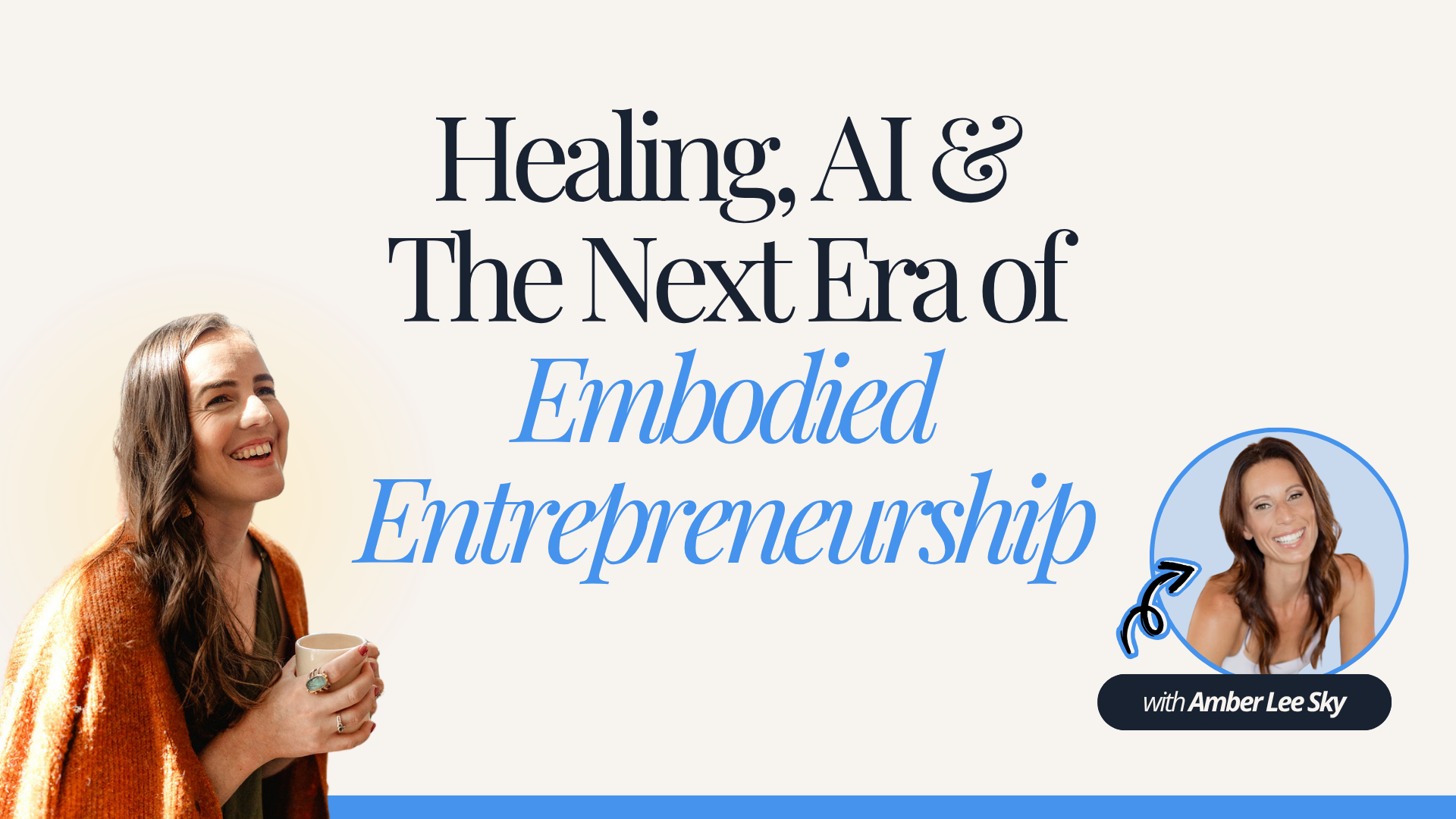
In this episode, I’m joined by Amber Lee Sky—a brilliant entrepreneur who built her business in the Costa Rican jungle, stepped away to focus on motherhood, and came back with a completely new mission.
Amber’s story is a masterclass in what happens when ambition meets surrender. She opens up about battling perfectionism, burning out behind the scenes, and the identity loss that came from walking away from work. We dive into what it really looks like to rebuild your business—and yourself—without letting the old patterns creep back in.
Her transformation from polished wellness guru to fully embodied business owner will challenge you to drop your own mask and finally lead from truth.
Key Takeaways:
- How letting go of the “perfect brand” created deeper success
- The boundary she now uses to protect her nervous system while growing a business
- How she’s using AI without losing her voice or authenticity
Amber Lee Sky is a mama, coach, and teacher who specializes in helping women liberate and embody their highest selves in life and business. Over the last 19 years, she’s produced retreats and trainings in 7 countries and taught for some of the world’s most revered clubs, retreat centers, and festivals. Her mission is to support women in reclaiming their power as the ultimate creators of every aspect of their lives. Find her on Instagram @amberlee.sky and AmberLeeSky.com.
________________________
More ways Embodied Marketing can support you:
If you’re ready to hand off your entire marketing strategy (from funnels to ads to copy) and finally get the expert team you can trust, apply here and let’s talk: helpmystrategy.com
WANT TO WORK WITH TEAM EMBODIED MARKETING?
Honestly, we’re more than a marketing team — we’re a tactical partner who will care about your business growth just as much as YOU (maybe even more)!
We’re here to play the long game and help you create a powerful impact!
SUBSCRIBE & REVIEW THE PODCAST!
Thanks for tuning into this week’s episode of the Embodied Podcast! If this podcast has added value and helped you in your business journey, please head over to Apple Podcast, subscribe to the show, and leave us an honest review.
Your reviews and feedback will not only help us continue to deliver great, helpful content, but it will also help us reach even more amazing entrepreneurs just like you.
READ THE EPISODE TRANSCRIPT
Emily Hirsh: All right. Welcome to the show. I’m so excited for this conversation.
Amber Lee Sky: Yeah, me too. Thank you so much for having me. Yeah, I’m really grateful to be here.
Emily Hirsh: Yeah, I am. Like you said, when you walked in, like I said, I’m like, I’m excited to get to know you better.
We’ve hung out like a little bit and then I feel like I followed you on social, so I’m like, I know you, but I’m excited to really know you today.
Amber Lee Sky: Yeah, same, same. Yeah.
Emily Hirsh: Well, I’d love to start a little bit with your story. I think that’s always a good spot of entrepreneurship and I don’t know all of your story, I know bits of it.
So wherever you feel like is relevant to kind of dive in, let’s do that.
Amber Lee Sky: Sure. Yeah. So my story, my entrepreneur journey really began in like my early twenties, around like 19, 20 years old. At the time I was. In college for dance, I was a professional dancer and actually danced professionally for eight years in San Francisco after college.
So dance was like my whole life, like from age three to college. And but I was really also into all these other passions. So I was into holistic health. I really fell in love with yoga and Pilates, and I had found all these tools along the way that were helping me basically be a better dancer and performer.
And so I was really passionate about those things outside of dance. And I knew that dance wasn’t going to be like the breadwinner for me. Like it wasn’t gonna be making me a substantial amount of income that I could eventually live on, especially in San Francisco. And so my boyfriend at the time was into blogging, had, this was when blogs were like first a thing and everybody was getting into the blogosphere and he had a celebrity blog and he started like making $4,000 a month off of just the ads off the website.
And I was like, whoa, this is a thing. Like just from getting a decent amount of traffic. From posting like Britney Spears photos or something, right? Like, totally not my niche at all, but I was like, well, maybe if I do this with health, which is something I’m really passionate about, then I can have like this kind of side hustle and, and bring in some extra cash.
So I did that initially and I was a blogger for many years and just got paid through ads and then started developing. I really got into holistic health and went through nutrition training and then decided to do holistic health coaching. And that was when Skype, it became a thing. I mean, this was like so long ago.
Technology. I totally, yeah, I totally remember Skype when Instagram was first online. Like we were like, we feel, I feel really old talking about this, but this is like back in the day. But also like not
Emily Hirsh: that long ago when you think about it, like Skype was like. 10 years ago, that was like the thing. Zoom was not a thing.
Amber Lee Sky: Zoom was not a thing. And so I did like Skype coaching. I did, I even did like Pilates, ’cause I went through Pilates certification after college which is like the full comprehensive training where I learned all the apparatus and equipment. Also the mat work went through Vinyasa yoga training. So I was teaching and had been teaching movements since I was like 18.
I did a lot of choreography or choreography for like my high school musicals and plays and stuff. And also did choreography in college. So that was kind of my like I’d say like the route to my passions and what I was building. And then it became so much more and I started doing retreats and workshops around the world.
And I started being invited to come teach at destination spas. One in particular was Rancho Laputa, which is down in Baja Mexico. And so I was living in San Francisco, but I’d fly down once a month and teach there for a week and then fly back. So it was really great because the city was really wearing on my nervous system for sure.
Like it’s. Not my ideal environment at all, but I loved what was there. I was there to dance and I was there to like train with the best and all the different modalities I was into and learned tech. I mean, I learned so much about the tech world being there and like launched my first online course and was just dabbling in trying to figure out how do I make this a sustainable lifestyle for myself where I can travel, teaching what I love, and have some online stuff I can sell, but also just have the flexibility and freedom that I wanted to be able to travel around the world, which was really a huge passion of mine.
And so that’s when I really so around age 28, I decided I’m gonna move to Costa Rica and open a wellness center. And this was a radical shift out of the, I was like leaving dance behind my whole career, which was, you know, again, I wasn’t like an infamous like ballerina or anything. It was just like I, it was my life for so long.
So it was a big deal for me to leave that. So I moved to Costa Rica. I opened up a wellness center where I could offer all the daily classes that I really loved, teach nutrition, run retreats, offer yoga teacher trainings and detox coach certification programs. And just did a whole bunch of different stuff down there.
And I ran that for about a year and then realized I’m stuck in a brick and mortar space. I don’t want to, I want the freedom and flexibility of a digital nomad, which is what I had prior to doing the the brick and mortar. And I was like, you know what, this isn’t. And also I realized being down there really quickly that it’s very seasonal down there and that like high season is great, but as soon as you get into green season, literally no one walked into my studio for like four months straight and I was like, this is crazy.
I’m burning through cash. This is ridiculous. So closed the doors on that and just decided I’m gonna run retreats every month out of different retreat centers in the area and still do online coaching. And that was around the time I started getting into business coaching as well. ’cause I had a lot of.
Health and wellness entrepreneurs coming to me and saying, Hey, I want your lifestyle. Like, what are you doing? You’re living my dream in Costa Rica. You’re doing all these cool things. How did you build this? And so I never really had an intention of doing business coaching ever, but I just had a lot of people saying like, your social media is really great.
You’re building a business. I want, how, how did you do it? So I just started teaching people like, I’m not a business expert, but this is what I’ve been doing and this is how I do social media and this is what’s worked for me. So let’s give it a go. And so the last, you know, I’d say decade of my business was very much running retreats and yoga teacher training programs, and also doing tons of business coaching.
Then I moved to Austin to marry my husband, my ex-husband actually. And we, you know, moved here to Austin to basically start our life together, which was a, you know, a really big shift for me to leave the jungle and my whole business down there. It was a big leap of faith to really come here and trust the, like, we’re gonna build this awesome life together, which we did.
And we did that. So that was, oh my gosh. Seven years ago, that was 2018 that we moved. So yeah, whatever that is, number wise, in two, that’s when I moved here too, actually. From California.
Emily Hirsh: Yeah. Yeah. Cool. Yeah. ‘
Amber Lee Sky: cause I’m from Santa Cruz, California. Yeah. So I, yeah, so I grew up in the Bay. But yeah, so leaving the jungle was a huge deal for me because it was just like my whole, my tribe was down there.
I was really deep in the medicine community working with Ayahuasca extensively. So I left this whole community down there to move up. But I really wanted to take a chance on what we were building. So we did that. And then since since then, I, you know, basically was doing a ton of business coaching and I reduced my retreat substantially just because I was traveling way too much.
And once we got serious about having a child, it became like, we, I can’t be traveling this much. And so once I was pregnant, then I was just doing a lot of business coaching. And then once my son was born, I stopped coaching altogether. I tried to coach in the first year and was so sleep deprived and so overwhelmed.
And my, my son was up like every hour or two at night to breastfeed. And it was so intense that I couldn’t really show up as a coach. So I closed my coaching business for the last, you know, three, four years. And now I’m coming back online after a big series of of things I’ve been through. I went through breast implant illness and now I’m in the midst of divorce and there’s just so many life changes happening.
Yeah, you’ve been through a lot, been through a lot in the last, like three, four years and so, but it’s all leading me to where I am now, which is like fully back in my power, really speaking my truth and really knowing who I am. ’cause I went through a very big period of figuring out, shedding a lot and going, who am I underneath all this?
You know, losing my breast implants now, like losing kind of the, the dream life I had built with my husband and our, and our future together, that’s all shattered. And so there’s just like, but beneath all that rubble is who I’ve always been and who I was prior to having my son. And. She’s coming back online in a big way, and that feels really good.
Emily Hirsh: Yeah, I can see it too. Yeah. I mean, you have such a great perspective and, and we’ll get into, you know, more of the lessons and stuff, but I feel like from observing your content, you always have this like real, like, you’re not sugarcoating what you’re going through, but, but also like, here’s what I’m learning and here’s the wisdom in it.
And, and I feel like yeah, you’ve been through a lot from what I can see. Just from what you Yeah. I’m sure. I don’t even know like, you know, half of the details, but just like it’s been a, a big initiation the last several years for you. Totally. And I feel like just motherhood in general is like, there’s so many women who come on this podcast and we have conversations about like the rebuilding yourself after Yeah.
Having a kid and then deciding, okay, what do I want my business to look like now? And all the things you didn’t plan for and like what, like just that alone is such a huge experience, such a
Amber Lee Sky: big transition. Yeah. Yeah. And with business, that was something that I really, ’cause in the beginning I was like, I really, I really wanna maintain my brand.
I really wanna maintain my income. And my husband was like, look, I got, I got us financially. If you wanna take a break and just focus on being a mom, which I really wanted to, I was like, okay, I’m gonna trust fall into like the full feminine era of like, okay, if I don’t work and I don’t make my own money for the first time in like 19 years, which is really scary for me let’s, let’s see what happens.
And I really did focus on my son for those first three years, but I really also felt lost. Like, I don’t have, I have this purpose with my son, but I’m, I’ve lost the purpose. That was like so much bigger than that. So much bigger than me and my family and my son. It’s like the, the bigger impact I’m here to serve.
You know
Emily Hirsh: what I mean? Yeah, yeah. I was gonna ask like, you know, you, your original plan wasn’t to do that, to stop working and then that experience of not working after really being an entrepreneur for a long time and having that full freedom over making money and your time and traveling, like, what was that?
Experience, like, and do you feel like you had to go through that to realize that’s not what you wanted?
Amber Lee Sky: Totally. Yeah. I, I think I, I really, I’m very much an experimenter in my life and I wanna, and I wanted to experiment. What would it be like to not have the stress of having to make money and do sales and marketing all the time?
’cause that is also, I mean, I was hustling, I was posting every day. I was really in that grind and, and I was making good money. But it was also just, there’s just this in the back of your head, I need to make money. I need to make sales, I need to be marketing. And just, it’s this incessant kind of almost survival instinct.
And it was so nice to let go of that stress and just be like, I’m being taken care of. It’s awesome. Like, I’m okay. But then there’s challenges that came up where I was like, okay, well I wanna spend money on X, Y, z, I wanna buy this new, like, just example, like patio furniture. Spent $9,000 on like a nice patio furniture set.
My husband’s like, well, I don’t really wanna spend that money on that. And I’m like, so it didn’t feel like, it didn’t feel like you had that I didn’t have the autonomy to just. Take the money that I wanted and, and in my whole life it was like, if I wanted something, I would just make the money and make it happen.
There was no like resistance or compromise or let me think about it, or it was just that I just did what I wanted, so to speak. And with that, I felt like I almost had to go to him to ask for money and he had to approve of it, like my father before we could do something. And that really irked me. I was like, this is why I always made my own money, you know?
And so we would kind of battle on that a little bit and he’s like, yeah, I understand why you feel that way, and I just don’t wanna spend the money on this. And I’m like, okay. So it, it just be, it wore me all war on me. And so, yeah, I mean that was a struggle. And then I think just, I felt very purposeless besides my son and I could pour all my love and attention into him, but I felt quite purposeless outside of that.
And I was really driven and really on purpose before becoming a mom. It was like, this is, and I was helping people find their purpose or really land on like their soul’s calling. And that was a huge part of my work. And so to go from that just. Solid knowing of this is why I’m here. I’m here to help people heal, transform and awaken and empower women to build their dream lives.
And you know, it’s to go from that to then I’m just sitting with my son, which is beautiful. I’m sitting totally sitting with my son, playing with toys and, and haven’t spoken to an adult in like five days. You know, like that. It really wears on you and you start to, and I, I, if I’m really, really radically honest with myself, I really started to lose myself.
And I thought, no, this is just me transforming. This is just me shedding these old identities. Maybe I’m just shedding this is how we like, I think can really gaslight ourselves as we go, oh, no, no, no. Like this is just part of the transformation. I’m shedding my maiden hood. I, and I’m grieving this, this past version of myself.
Yeah. But also you’re, you’re what I was, what I now know in hindsight is I was losing myself and that was really painful for me. I was losing this part of me that needed to really stay online, that I didn’t realize needed to stay online. I just kept thinking, oh, I’m just shedding that part of me and Maidenhood was, was back then and I’ll never go back there and that part of me will never show up again.
Well, she’s, she’s in there, she’s been hiding under, under motherhood is what it feels like.
Emily Hirsh: Yeah. Yeah. I I feel like not enough people talk about this because I feel like we’re also in a, a season in a phase where a lot of people are negative towards like doing Yeah. Which I get right. Like there’s an imbalance to it, but it’s like there are women like I’m one of ’em.
Yeah. It sounds like you’re one of ’em. Yeah. Where it’s like I need to have something that I can build and that I can create and that is bigger than me. I could not just be a stay at home mom. No. And on my last interview I had Angie Leon and she was asking, ’cause she doesn’t have kids yet, and she’s looking and she’s like, like, why can’t you just be a stay-at-home mom?
Like, because she feels like she won’t be able to either. And she’s like, you know, she’s was grappling with like a right and wrong. Yeah. And it’s like, I really feel that some women are just wired. To create. And it’s not that being a mom isn’t enough, it’s just that’s a, that’s a piece to it, but it’s not your whole identity.
Totally. And because there’s such a, like I have gone through where it’s like, am I, am I working too much? Am I too ambitious? Like is there too much piece? But it’s like, no, that’s my gift. Yes. And as long as I’m in alignment with the time, for me, it’s presence with my kids. Like, it’s not about like the number of hours, even though I used to like, try and be like, okay, was it enough hours today?
You know, and look at it, and it’s still a constant conversation in my head, right. When you want, you want it all. But I think there has been such a like movement towards slow down and, you know, don’t work and don’t hustle. And, and there’s always a balance. There’s always a, a pendulum swinging one side to the other, but.
It’s okay to have that ambition. It’s okay to want more than just motherhood.
Amber Lee Sky: Yeah. And I think you, the key that really hit me in what you were just sharing is like this creative piece. I didn’t realize how important it was for me to be creating con like that content creation was such a powerful outlet for me.
Like for me to express my voice and my creativity that just vanished when I became a mom. ’cause I wasn’t creating content all the time. And part of me enjoyed not having the hustle of having to create content. And so I would just create content when I felt like it. But there, there’s something very powerful when that is kind of your archetype.
That, that you have that ability to do that and that that’s part of how you make impact express Yeah. Part how you express, and that if you’re not doing that, then you’re stifling and, and numbing parts of yourself. Right. And I think some women, I see so many women who are just immaculate, stay at home mothers and they thrive in it and they love it.
And they’ve got six kids. And yes, it might be intense, but they really, really love it. And they don’t have this. Eagerness or desire to be building a brand or making a larger impact outside of their family and amazing, like I realized that’s not me. Just by experimenting and really swinging it so far to the other side of the pendulum, going from like.
Crazy intense hustle boss babe, which was not in balance at all to then like, trying to be a stay-at-home mom. Like those are just, I needed to be somewhere in the middle for sure.
Emily Hirsh: Yeah.
Amber Lee Sky: And I think everyone, every woman needs to experiment and figure out what that is. ’cause I don’t think, you know, until you become a mom, you don’t know what is gonna work or not work for you.
It’s only in that first year or two where you’re like, okay, what is happening and what, what can I fit in if I wanna fit it in? And you then you maybe overwork too much and realize, and you burn yourself out and you just, you have to learn by doing.
Emily Hirsh: Yeah. Yeah. And I think there’s seasons too. Like you might go in a season of your life where you do wanna work less and then that might change, you know?
And I just think there’s so much, like, this is the right way out there, you know, people wanna make it so linear and it’s so nuanced. What, what the right thing. And I think for me it’s been, it, it’s interesting. Like I, I started my business when I had my son and I was 19, turned 20 when I had him and quickly became like breadwinner because I’m a really good entrepreneur.
And so. I never had, like, I was in survival in a different way of like, I didn’t have the option it was
Amber Lee Sky: to take a break. Yeah.
Emily Hirsh: I didn’t have the option. And so I was very much in survival of like survive, like new baby young, no idea what I’m doing. And then building this business that started taking off like way more money than I ever could have imagined making.
Wow. Which was incredible. But then, you know, I had another kid two years later and, and just, it was rough. And so there was a, there’s been a lot of, okay, now how do I. Build from a place that’s not survival. Totally. Because for the beginning, like that’s what drove me was the, like, you have no option but to create success.
And honestly, that can create a lot of success.
Amber Lee Sky: Absolutely. You have no option but to successful people.
Emily Hirsh: Right. But to, to create the money. Then you get to the point of, okay, I have the money and now I have a ton of pressure and also like, what am I doing? And so that, that was like the second half of my like last probably five years of that and, and learning like when is it cross, when does it cross that line for me?
Of, of hustling or, or pushing too hard just for the sake of pushing. Yes. And then when is it in that creative, like inspirational place and. Where I feel in balance with my kids, and it’s a constant dance, and I think it’s, my kids’ ages have changed. It’s changed and obviously getting support was a huge piece of the puzzle, but I couldn’t afford it in the beginning, so, exactly.
Yeah, it, I, I think it would’ve been interesting. Obviously it wasn’t my path, but if I had the option to test out, not not working, but I know I would’ve been like similar situation and, and experiences as you of like, I need something, something else besides motherhood.
Amber Lee Sky: Yeah. Something that’s mine. Something that is, and even for some people that might just even just be a hobby outside of motherhood that they’re really passionate about.
But for me, I now in hindsight understand it’s really like I need to, I’m meant for a lot more. My soul in this life, for whatever reason, is meant for a lot more than than what I was doing. And that’s, that’s okay. Yeah. It’s okay.
Emily Hirsh: Yeah. And yeah, and I think more people need to say, that’s okay. ’cause there’s so much guilt, right?
Yeah. For moms of like, you should be the homestead, stay at home mom who, you know, barely works on their business and Totally. It’s, it’s a lot. And men never feel that. I’ve talked to a lot of men who are like, I’ve never once felt guilty about working.
Amber Lee Sky: Of course. And I’m like,
Emily Hirsh: yeah, why would they? Yeah. Like you’re wired different.
Amber Lee Sky: Yeah. It’s not societally programmed either. Yeah. It’s like they, they’re laughing. It’s just very normal. Yeah. I’m
Emily Hirsh: like, since day one I’ve questioned how much time is enough and how much is too much and yeah. Yeah. Yeah. But I think also just learning that it’s about presence. That’s what I, that’s really what I learned through the, through the last 10 years is when I’m working, I’m all in and I’m working.
Yeah. And then when I’m with my kids, I’m not perfect at it, but my intention is to be fully with my kids and fully present in that moment. And, and kids don’t know whether you’ve been present for 10 minutes or an hour, but if you’re present
Amber Lee Sky: Yeah. They
Emily Hirsh: know.
Amber Lee Sky: Yeah. Agreed. Agreed. I think that that quality time is more important than, than, you know, and I, especially now that I’m in a co-parenting situation, it’s even because that’s like a different level of, of presence because now I have half as much time with my son as I did before, and now I, I’m forced to even be more focused on the quality of the time that we have.
Because I think before I really took for granted that I have my son with me every day and that I can wake up with him and I’m with him all night ’cause he bed shares with me. And I really, and though that was really hard on me to have like, so much on my plate and feeling like a single mom within a marriage, like that’s also really hard too.
But now that I’m co-parenting and I have him 50% less, it’s. It’s been this radical let’s say refocusing on how can I make the time that we have together the best possible time ever? How can I make it more full of presence, more adventurous, more fun for us, more connective? So I feel like I’m actually a much better mom now than I was before because I was so burned out.
Like just doing it all really what felt like by myself within a marriage versus being in a co-parenting situation. Yeah. Yeah.
Emily Hirsh: Yeah. And I saw, I saw last summer how you went on so many like adventures and water parks. Oh my, my gosh. And it just made it such a great experience the time you had with him.
Amber Lee Sky: Yeah. Yeah. It makes it that much better. And that, and I’m super adventurous and that’s something that I now get to share with him. He loves it. And it’s just one of my highest joys is getting to do that with him.
Emily Hirsh: Yeah. And so it’s like how the perspective shifts of when you switched into that co-parenting season, now your time with him.
Yeah. Your perspective changed on how to spend the time and, and yeah. You appreciate the things that were harder before.
Amber Lee Sky: Absolutely. Yeah. Yeah. ’cause we used to just stay home a lot and, and not that that was. I think part of that had to do with the fact that I was so run down and so depleted with my health and there were so many other layers to like, why I didn’t feel like I could go out and do a lot of that stuff just physically, mentally, emotionally with what I was going through.
But with my health journey and my marriage and stuff. But, but once I was feeling a lot better and once I was kind of free of a lot of those burdens, it became like, okay, like now I have the time, energy, and space to really be the mom I wanna be.
Emily Hirsh: Yeah. Yeah. So I wanna ask, you’re obviously very driven. I feel like I, I really relate to the drive since 1920.
That’s when I also started my business. And before then, like always an entrepreneur, even as a kid and just having that drive. Yeah. What do you feel like drove you in, in all of these years? Like what’s your, and I’m sure it’s evolved Yeah. But what really drives you to create and, and have the impact, but all the things you’ve created from the retreat center to the coaching, like.
What’s the driving?
Amber Lee Sky: I think the drive for me is to help people in ways that I needed because a lot of the tools I picked up along the way were things that I found that really helped me through really challenging times in my life. And I’m a three five manifesting generator. And I dunno if you’re into human design, but like part of what I’m built for is to trial and error and fail and make all these mistakes and then give back, which has so totally been my life.
Give back the things that I’ve learned along the way. And so for example, like I got into Pilates mainly ’cause I had severe lower back pain and issues as a dancer. I had all these kind of chronic injuries and I found Pilates and it radically shifted my body. I had no more pain, I was able to dance so much better.
And so I was like, ah, this is something I can teach and help people with anyone with back pain, I can create a back care program, which I did for many people. I did a lot of one-on-one coaching and back care programs for people with back issues. And so anyway, it just became like, this is my mission is to take what I’ve learned and healed from and, and give that back.
And so that. It’s, I mean, a thousand examples of that yoga, Pilates, working with medicine. Once I started working with Ayahuasca, I had such a big healing transformation. I was like, okay, now I wanna bring this into my work. And then, so it’s just been one little thing after another that’s been, this is the challenge I’ve been through.
This is the, these are the tools that help me and now how can I give it back in a way, either by becoming an expert in teaching it, or by just providing information and experiences for people where they can experience those things.
Emily Hirsh: Mm, mm-hmm. Yeah. Yeah. And when you look at the, the last, like all the seasons of your business and you were like observing yourself, what would you say are the traits and the things that brought you the success?
’cause obviously creating content and connecting with people you’re naturally, yeah. Good at. But someone who’s looking at, you know, you, it seems like you started new things and you created success like many times. Yeah. From the retreat center to the coaching, then to the business coaching. And you kind of just like.
You, you have this ability to create success out of whatever direction that you wanna go. And if you were observing that, what would you say is the traits or the things you do well that kind of could contribute to that?
Amber Lee Sky: I think it’s the willingness to follow, really follow your heart and your intuition and what’s lighting you up.
And for me, I just kept following the guidance, the inner guidance of what am I being called to right now? And, and that’s why part of motherhood was so challenging for me, is that part of me just kind of disappeared and went really quiet. And I was like, wait, where’s that inner spark that was so lit up about different things?
And so for me it was always about following my spark. Like, oh, I’m really into Pilates now. Okay, I’m gonna create Pilates programming. I’m gonna do a retreat around Pilates, and now I’m gonna stand up paddleboarding. Okay. And so I found ways to bring in all my passions into those things. But I’d say that it’s really listening to my intuition and heart, really following the things that light me up.
And then building, being courageous enough to build. Something around that in order to serve other people. So it was the combination of my passions, which, you know, ’cause I can’t sell things I’m not passionate about, I mean, it’s just nearly impossible for me. I really have to be so invested and so such a believer in my own transformation with it, for them to be able to sell it.
And so, yeah, I think for those listening, it’s really about where do my passions. And and where am I lit up and where does that meet how I serve people? And that’s the magic formula for really creating, I think, the most transformative types of programming.
Emily Hirsh: Yeah. And I think, and, and you’re so authentic in your content.
I think you have that such a great ability of mm-hmm. Just like the realness with also the wisdom. Yeah. That’s what I see in your content. Yeah. And, and so whatever season you’re in, you’re creating that. Ability for people. Yeah. To connect.
Amber Lee Sky: I think it’s really important for people to know that like we’re all human and we all have ups and downs.
And I think part of my messaging is around like you’re never alone in the things that you’re going through. And I’ve only, I only learned, I mean I learned the most through my challenges. We all do. And so for me to hide and pretend like I don’t have my own shit that I walk through and the shadows I face and this like, it’s just, I don’t think it’s serving people to present this facade of perfection.
’cause I did that for a while. I really did that for a while in my business. And I honestly suffered tremendously by doing that. And I attracted the wrong type of clientele. I attracted the clientele that pedestal me and expected perfection out of me. And then when I didn’t meet that well, then I got. All sorts of feedback about how I wasn’t meeting their standards or wasn’t enough and just really interesting dynamics with people.
And when I started to be more myself and more real and own all aspects of myself is when I started to attract the right people to me that were like, I love you for all aspects of you. Not just, just like in partnership, right? Like friendship. It’s like you attract what you show up as. And so it was important for me, I learned over time in business how important it was for me too.
Share all aspects of me and not just the highlight reel and that that was gonna create the right people in my, in my sphere.
Emily Hirsh: Yeah.
Amber Lee Sky: Bring the right people to my sphere. Do you
Emily Hirsh: feel like you, you naturally do that as like, as a kid, were you able to do that and, and just be authentic and be, not feel like you had to put on a show?
Or did you learn that?
Amber Lee Sky: No, I think I learned that through. So I think one of my biggest transformations was going through bulimia. So I was blaming it for five years. And a huge part of my healing journey from that was because I was, I really suffered from being a type A perfectionist most of my life because I was always the good girl who got the straight A’s who did all the things.
I was a performer, I was a dancer, right? I was always in front of mirror. I was expected to be perfect in all the ways with choreography and my look and, and there was a lot of pressure to look a certain way and perform a certain way and to be super disciplined. And that was my whole life until, you know, I just, I got outta college and started to just kind of do my own thing.
And so I always had this really intense work ethic and discipline and ability to, you know, just drive hard at the things that, that I was interested in. But I really suffered in that because again, it was just this facade of perfection. I, I didn’t let myself feel my emotions. I really struggled to, I just would stuff everything down.
And so I’d get, you know, feedback on my solo, for example, my choreography, and it would really hurt me, but my mom would just let it roll off your back. You know, you had to have a really thick skin in the dance industry. But what I really neglected to understand when I was younger is that not letting myself feel things was obviously gonna lead to havoc down the road.
And so what I, what I think believe, what I believe I. Bulimia. Why it manifested for me is because I was suppressing all of my emotions. I was really trying to have it all together and have this perfect facade and be smiling and happy when really inside I was hurting a lot and not allowing myself to cry or process things.
And so that’s why when I went through bulimia you know, I was in this really dark place of, of being afraid to gain weight, afraid to lose weight. I was purging two of the three meals I was eating a day. Like it, it was a very, very dark place to be. And the guilt shame cycles were incredibly intense and I was hiding it from everybody.
So I had this facade of, oh, I’m this holistic wellness coach, but I’m bulimic behind closed doors. And so the lack of cong, of Inc. The incongruency, the lack of integrity in who I was and how I was showing up was literally crushing me. And so through all of that, and once I started to heal from bulimia. I went, I, there is no other way for me to live than an integrity with myself.
I have to practice what I preach. I have to embody what I preach. If I’m preaching health, I can’t be drinking wine all weekend. Like if I’m talking about the power of green juice cleanses, I can’t be partying like an animal with my boyfriend on the weekend. This was kind of like in my early twenties, I was figuring this out.
And that’s around the time I stopped drinking because I was like, if I’m preaching all this health stuff, I, I need to be in integrity with what I’m doing. ’cause that lack of integrity I learned is what just destroys you mentally, emotionally, physically, spiritually. Like it just, and so my healing journey really took a huge shift once I started working with medicine because it forced me to feel all those emotions that I had suppressed, all of the pain and trauma and things that I had gone through when I was younger that I just pretended didn’t exist.
I was like, oh, no, no, no, no. There’s a 10 years of emotional baggage you need to process and that’s going to be your liberation. And it was. And so since then, it’s like, okay, now. I feel my emotions. Yeah. I feel my emotions. I let him move, I let him process and that’s been, yeah, a huge key for me.
Emily Hirsh: And so when was that?
What part of the journey?
Amber Lee Sky: So, so my bulimic journey journey was like, in the beginning, it was like in my, my middle twenties, and then I was healing and then like a couple years later sat my first ceremony. And so that’s when things really kicked off and I went, okay, now the actual thoughts that were really looping consistently, even though I wasn’t bulimic in terms of like the behavior, the loops were of the mind, were still going.
And so when I started working with medicine and processing my emotions was when those loops stopped and all those thoughts and obsession about food just completely vanished. And I was like, there is magic in this work. I can’t really nail down how it’s happening, but it’s happening. You know, that these thoughts and the, the trauma and all of these.
The emotional baggage I’ve been carrying. Once that was cleared, the mind really got super quiet.
Emily Hirsh: Mm-hmm. Which
Amber Lee Sky: was huge for me. ’cause that when you’ve lived with an eating disorder, I don’t know if you’ve been through something like that, but when you’ve lived with an eating disorder, the, the looping of the mind and the thoughts and the racing fear and anxiety, it’s, it’s just overwhelming.
It consumes your whole day.
Emily Hirsh: Yeah.
Amber Lee Sky: Yeah.
Emily Hirsh: Wow. Mm-hmm. And so do you still use medicine or did you go through a phase and change? No change. So I, I went
Amber Lee Sky: through a, a very big chapter, about seven year chapter of working with ayahuasca really extensively and running retreats monthly where I was working with shaman.
I never served medicine. That was never my path. But I would bring groups to work with the shamans I was working with who were awesome. And so there, you know, it was great healing experiences. People had profound transformations. And I got to a point where my body was like, this is a hard no. My nervous system was way too overwhelmed.
I didn’t have enough time to integrate. I was sitting away too often. I was sitting out of obligation. Which I would never recommend sitting out of obligation because my group was sitting, I felt like I needed to sit every night with them. Not a good situation to be in. Your nervous system will be like, Hey, hey, hey, this is not, this is not in an in integrity anymore, and you’re not doing these things for the right reasons and you’re not giving yourself enough integration time.
And so I learned the hard way what can happen when you overdo medicine work. So that chapter, when I moved to out of Costa Rica, that chapter really closed for me. And I had like one more medicine retreat right before 2020 and COVID happened, and the whole world shut down. And that’s when I stopped being able to even run my retreats because of the pandemic.
And so I stopped. So from that day moving forward, it’s been like at least, I mean, five years now that I’ve not sat in a ceremony. But in that time I’ve been through all these other things that have been very intense, but. Again, the, the integration for me is super, super important and I had just been not giving myself enough time to do that.
Yeah. And so now I’ve had this like very sober five year period, like so sober, not even coffee, not even like no mind altering substances. And it’s been so freaking good for me to be super grounded in my body and to really integrate and embody the lessons I learned through all my medicine work and say, okay, like, thank you for that time in that chapter.
But that’s not where I’m at right now. I don’t feel called at all. I actually feel honestly terrified of sitting with medicine now, which is interesting. And I don’t know if that chapter will ever open again. And That’s okay. That’s okay. Like, I’m happy meditating and practicing yoga and I can connect to my spirit and higher power and whatever in my own way, and I don’t need medicines to do that.
And I think that there was a time when I depended on them a little too much for that connection.
Emily Hirsh: Yeah. And I think that is, as you know, in Austin, like as a thing here, a very common, when I moved here, I was
Amber Lee Sky: honestly shocked at like the abuse of substances here.
Emily Hirsh: Yeah. And they, you know, it’s, it’s like mirrored as me or said medicine to kind of mask it, but it’s crazy.
Yeah. Yeah. Dangerous.
Amber Lee Sky: It is dangerous. It’s super. When I moved here, I was really appalled at the lack because coming from like such a I come from a very specific lineage within the ayahuasca tradition, like what we were working in. And so, and there was so much integrity and honoring of like the indigenous, and then coming here and seeing how people are just drinking ayahuasca at parties on the weekend and they’re drinking it all the time, and then they’re, and they’re mixing all these substances.
I’m like, whoa, whoa, whoa, whoa, whoa. This is what happens when Westerners take control. Take yeah. These things and just run with it and, and have no idea what they’re messing with. They have no idea. Yeah. What portals they’re opening, what energy they’re attracting. It’s, it’s a very, and that’s why, you know, people have psychosis in all sorts of, and all sorts of entities and situations like that because they don’t know what they’re messing with.
And I’m like, yeah. Like my other friends in the community who are, you know, either integration coaches or, you know, they work in that space. They’re just like, this is wild here.
Emily Hirsh: Yeah. And it’s sad because it’s such a powerful tool. It’s obviously, it changed your life very much so. And really healed you. And so it’s like, if you feel, I feel like if you feel called to it and you are in the right setting and Yeah.
Respecting it, it can be really powerful. Absolutely. I have actually not ever sat with Ayahuasca, but I have done Bufo. Okay. Twice or like four times, two different experiences. Multiple times. And it’s interesting. So I haven’t talked about this on the podcast yet, but I just went to Joe Dispenza.
Amber Lee Sky: Yeah, yeah. A ago Tell I was saw. Incredible. It looked amazing. Yeah.
Emily Hirsh: And it’s made me realize all of it is going to the same place. Correct. Including meditation. Amen. Like you’re all going, you’re going to the place of nothing and everything. And realizing that we are consciousness and we’re not our mind, we’re not our body.
Amber Lee Sky: Correct.
Emily Hirsh: And in the experience with Joe Dispenza was a week of 35 hours of meditation and Which is
Amber Lee Sky: a lot. Yeah.
Emily Hirsh: A lot. And I realized, in my opinion now, and this is an opinion. I think that is the most embodied way to get to that place. Agreed. Because you have to work for it. That’s it. And you have to overcome yourself over and over and over again in meditation.
Completely sober. Yeah. You know, and like when I did Buffo, it was powerful and I got to that place and I also hit, you know, resistance and can see the ego and all those things, but it’s like a blast off. Mm-hmm. Back. And you’re like, what happened?
Amber Lee Sky: What
Emily Hirsh: happened? Whereas the meditation, it is so much easier now for me to bring it into my daily life and drop into that place.
Which it sounds like too, you’re saying, you know, I can get there through meditation and yoga and, and so it was a huge shift for me of like. Oh, like this is, and and this is also the, the true like ancient practices, like meditation is so ancient. Wisdom and breath. Using the breath Absolutely. And the kundalini breath.
Absolutely. Yeah. So I, I am, that was more life changing than anything I’ve done. That’s awesome. Awesome. Then mushrooms than bfo because I had to work for it because I really, truly had to overcome myself over and over and over again in meditation. Yeah. And yeah. So it was just, it just, and it was so created.
It wasn’t, there was
Amber Lee Sky: nothing external needed Exactly. To find that place and that, that, I think that’s the greatest gift, but beautiful like. The cool thing is I feel like he’s teaching you guys things that maybe, you know, took Mon Monks living in, you know, Nepal maybe months to connect to after sitting in a dark cave for weeks on end or months on end.
You know, it’s like whatever method he’s teaching, which I hear is amazing. Like you guys are able to tap in really quickly compared to maybe other meditation methods. But yeah, I would love, I was actually feeling very called to go to one of his his retreats. ’cause I think it would just be really cool to hear like how he’s doing it and how he’s helping people with these skills and tools.
But I totally agree that I think the lack of embodiment and the lack of integration is a really big issue in the medicine space and in ’cause everyone wants to experiment and try these things. And by all means, do you? I did for sure. But then you come to this realization of like, no, what’s actually real is like 3D and we have to really.
Learn to live in 3D and if we keep escaping 3D, we’re cool. Like that’s where we’re going when we die, that’s where we come from. But like, we’re here to learn about Earth school and how to live in these 3D bodies and have all these experiences. And so if you’re not, and to be really rooted in, in this 3D realm is though I think people are trying to escape it constantly.
Like it’s, it’s not why we’re here.
Emily Hirsh: Right. And our soul, our soul chose to be here for a reason. Correct. Correct. In in, in a human body. Yeah. For a reason to learn specific lessons. Yeah. So even, and I haven’t talked about this too on the podcast, but I’d be curious your thoughts because after Joe Dispenza, I realized how much even tools like breath work to the level that we use it today of like 45 minutes of like breathing intensely.
I feel the focus is, lets. Bring out tr the trauma and let’s focus on the anger and, and sacred rage. And I mean, sacred rage is something that I, a month before was like, yeah, let’s have it at my retreat. And, and, and a fan of that, like, because I experienced it and had a really positive effect, but I realized that it like stops you at that point where Joe Dispenza takes you to let’s where your attention goes, your energy follows.
So are we gonna put our attention on anger and sadness and trauma, or are we gonna allow that to process in our body? Sure. ’cause it naturally will when you are doing meditation and breath. Sure. But what about the focus on the future piece and where you wanna go and the, and the, not, it doesn’t have to be happiness, but the joy and the creativity and the inspiration and the gratitude.
And so, I don’t know, I’ve, I’ve still been processing, but I had this like in that week, this realization of like, I think that. My season pre, previous to that was too much focus on mm-hmm. The past, the trauma and trauma and like, let’s, let’s really not be a victim to it, but like let’s, oh, like let’s really put the focus on it and the little girl and Yeah.
And it’s like, do we really need to do that? I don’t know. I don’t think so anymore. That’s, that’s now my opinion after experiencing that because I’m like, that week was more life changing than anything else because I started focusing on the future and who I wanna become. And I love that.
Amber Lee Sky: Yeah. I love that.
I love that that’s his focus. Because I do think that for sure we can get, ’cause I also, this last, you know, couple years has been deep into, I was doing somatic experiencing for over a year. I did EMDR work. I did. I’m now doing cognitive, cognitive behavioral therapy work right now. But I, I tried all these different modalities because I was trying to regulate my nervous system after xplan.
It was having all these nervous system issues, which I think was somewhat also related to how much ayahuasca I drank in the past. But nevertheless, like I had, I was, and because I had all these emotions coming up and all this old baggage coming up to be processed and moved, I really focused on the somatic piece.
But I, like you said, it’s like if you dig, if you keep digging, you’re gonna find something. And if all you do is dig and dig and dig and dig, you’re always gonna find something. There’s always more layers to dig into. And so at what point do you say, I’m done suffering through all of my emotional baggage and it’s time for me to focus on this next chapter?
And that’s really where I’m at now is I’ve shifted into like, okay, I’m on the other side of all that really intense processing and now I can focus on this new chapter. But I do think that all that is necessary. But you can get stuck there. You can get stuck there. Just like anything. Yeah. You can get stuck and, and be too heavy into processing to the point where it’s dysregulating.
’cause I really did get to a place where I was like, should I be doing it? Somatic experiencing every week, or is this too intense on my nervous system? And I had to really decide, okay, this practitioner’s a little too intense for me. They’re pushing me too deep, too fast, or they’re forcing me to have bigger experiences that are actually more dysregulating than helpful.
So then I started working with people who had less intense modalities. Like I started doing internal family systems work, which was way less intense than somatic experiencing. And it was still super helpful and sweet, and I could still feel emotions, but it wasn’t like super, super deep experiencing. And so, yeah, I think you just, I, I learned the hard way that I think there’s a balance to be struck in how how much you stay in a certain modality or how you’re digging, basically.
Emily Hirsh: Yeah. Yeah. And I mean, all these tools are available and they all can be helpful. Totally. And I think it is about experiencing too, like what, what’s right in this season. I think there’s a part of me that’s like, oh, I know that Joe Dispenza happened at the exact right time, and probably the. Work that I, because I’d done a lot of like breath work and B, the buffo sessions in the last two years.
And I think that probably lined me up to be able to be at Joe Depen and receive the level of transformation that I did. So totally. There’s no right and wrong, but it did make me think a lot of, of how easy it can be to just focus on the tr like trauma is so big right now and it’s so big. Right. Let’s focus on that and pull that out and experience that.
And we need to get out of our head and into our body. Yes. But we’re also not our body. Like we, we can overcome emotions, we don’t have to sit in emotions. And so yeah, it was really powerful lessons. I love that. I
Amber Lee Sky: think there’s such a balance to be struck, like you’re saying. ’cause you, it’s easy for, if you’re an easy processor, like for me it’s very easy to process emotion.
I can go super deep and I often am like, dude, I’m like, I must be processing ancestral stuff ’cause it is so deep for me. And that again is you can get stuck in that place of, okay. Trying to figure out why am I processing, what is it attached to? And you can just get stuck in this bubble of, and especially because it’s so big in the collective right now, you can get really sucked into, because I was following all these pages on Instagram about all these different types of trauma therapy and when all you’re being fed is the same thing as well, and then you’re also in your own processing.
It just becomes this echo chamber of this is what I should be doing. And now looking at it from the back, from the other side, I’m like, that was all great and I learned a lot, but like, I think I went out of balance.
Emily Hirsh: Yeah. Yeah. Yeah. I think, you know, ultimately it’s important to constantly kinda question, right?
Right. Like, constantly question like, is this still serving me? Right? What’s my intention behind this? Mm-hmm. Because I think it is also easy to find a mentor or somebody you look up to and then be like, everything they say is truth and I’m not gonna question it. And so I, even with Joe Depen on, I’m like, okay, where’s his weakness?
Yeah. Like blind spots. Like, literally like where is the blind spot? Because every mentor has that and, and it’s easy to be like starstruck or Totally. Oh, they have all the answers. So I think that that just pause and question and the intention behind what you’re doing. And is that still in alignment?
’cause it’s gonna change, you know? Right, totally.
Amber Lee Sky: And, and, and you know, had you seen his stuff maybe years ago, it wouldn’t have landed for you or it would’ve landed in a different way. You would’ve been like, oh, this little nugget I really like, but this, all that other stuff he was saying. I don’t relate to it all, but it’s like, yeah, I think you just gotta experiment and figure it out.
And I think always in hindsight you’re like, oh yeah, that was way out of balance. Or that was. Yeah. But you don’t know when you’re in it. Right? And so you just gotta go through it. And
Emily Hirsh: most of the time it’s like, well, I needed that to learn. Yeah. Learn to learn. To learn, to learn. The polarity of it in the contrast.
Like I
Amber Lee Sky: literally think that’s why we’re here is like, we’re here to just experiment and figure things out and go, okay, that worked okay. That went too far. Okay. That was too like, okay, just adjusting, pivoting constantly.
Emily Hirsh: Yeah. Which is like, you can’t fail. Yeah. You know? And, and the intention. Intention behind it and presence behind it.
Are you consciously doing it? Is it subconscious and Yeah. We’re here to learn and experience. Totally. For sure. So with where you’re at now in your business and kind of rebuilding in this new after, after motherhood and everything you’ve been through, I’d be curious, like changes you’re making or what’s in alignment and kind of lessons that you’ve learned over the years of, okay. You said at one point like, I was really hustling too hard and Yeah, and pushing too hard. And I have a similar, you know, experience with learning that. And so like, what does it look like today? Business, and so that it’s in alignment with where you’re at and in that balance, so to say. I
Amber Lee Sky: if, yeah, I think I’m still trying to figure out what that’s gonna look like for me, because I am now, I feel like I’m so different now than I was back then.
And the way that I wanna show up is so different now. I feel very unapologetic and kind of in this, like, I don’t give a fuck era where I’m just like, I’m gonna just speak about things that matter to me. I’m gonna put myself out there in new ways. I’m gonna create content in a way I never have before. I’m gonna talk about things that I wanna talk about that maybe I wasn’t willing to talk about before.
And I’m not gonna try to stay within the niche I was in before, which was like just a lot of Pilates, yoga, you know, holistic health and nutrition stuff, which is great, but it’s not where I’m being called right now and it’s not what. I’m passionate about necessarily as much anymore. And so I’m trying to figure out, yes, I wanna run retreats.
Yes, I wanna bring in my favorite modalities into those retreats. Like I know you do, but I’m also so different. And so I’m trying to craft it in a way that is really focused on empowerment and liberation, which is always part of my brand, but now it’s like a new level of understanding of liberation and embodiment and awakening.
And I’m like, and all these lessons learned, how do I wanna bring all that in? Do I wanna do a retreat for women going through a divorce who’ve just gotten through their divorce process and really are reclaiming their power and figuring out who the heck they are on the outside of marriage and motherhood?
Like that’s a really big thing. So I could just do a retreat around that if I wanted to, or, and then with business coaching, I really love business coaching. It’s not my highest joy. I’m good at it, but it’s not my highest joy. I’d much rather be teaching movement or dancing in the jungle or whatever.
Right. But it’s, it’s something that I’m, I can do. But now that AI is here, that has just totally changed the whole game. And so when I started getting back into like rebranding myself last year and rebuilding my website and going, what do I wanna offer? And getting clarity around that, I’m like, man, what used to take me a year to do with a client is now, can now take me like a couple weeks.
Or, you know what, putting a business plan together 30 seconds with I ai, it’s insane. This, this, the technology. I know you get it. So how do I now use that and stay relevant? Because if someone can just go to chat GPT and download a business plan, then what’s, you know? So it’s like you really have to start to think outside the box.
How am I going to create something that’s super meaningful and transformative that also is using the current technology that we have. ’cause a lot of people are still not using AI the way that they could. So I see a lot of my friends creating AI courses, right? Here are all the tools I use for AI because.
That is something we need to learn how to leverage and use. ’cause the landscape’s gonna change so much in the next couple years. I, we can’t even fathom what it’s gonna be like.
Emily Hirsh: Yeah.
Amber Lee Sky: And so I think the more I’m really leaning into video content right now. ’cause I feel like that’s the most real thing that we can do, right.
Is being our authentic selves on video, because that’s something that a bot or AI can never take away from us. But, and, and being authentically ourselves and creative is the only way we’re gonna maybe stay on top of the AI stuff that’s coming out. So yeah, I’m still trying to get super clear, but I know it’ll involve retreats.
I know it’ll involve business coaching to some degree. The question is, I’m not there. My, my focus is that I don’t wanna be hustling and grinding the way that I was before. And so the structure of the business will be very different and the way that I’m leveraging my time and energy in a completely different way because I’m no longer going to, I’m no longer willing to sacrifice my sanity and health and burnout the way that I used to.
And that was my, I mean, I would. You know, a hundred hour weeks hit burnout. Just, that was my cycle for so many years being in survival mode and really fight or flight around my business. And now I’m like, there’s a better way and I’m gonna really hold myself to doing that because it’s easy now as a single mom as well, to be in a state of I gotta take care of everything now.
Now I gotta be a little bit more in my masculine, so to speak around like I am everything, the breadwinner, the mother, the, I am doing everything now. So how do I do that now with more grace and ease and structure and systems that give me the time to do that.
Emily Hirsh: Yeah. Do you feel like you, you healed your system enough to where you wouldn’t be able to fall back into that hustle and like survival mode and that state that you just like rejected At this point?
Amber Lee Sky: I, I’ve tasted it. So this last year I did jump into a business project with a friend of mine and I, and I found myself going into that really obsessive ’cause it’s real easy for me to drop into it and get hyper-focused on something and then forget to go to the gym and forget to, it’s, it’s. It’s easy for, I’m, I’m able to catch it now.
And so after, you know, a week of doing eight hour days on my computer, I went, I cannot do this to my body. I have to be a, I need to go outside. I need to go to the gym. So then I restructure real quick. Right? But like, it’s, it’s interesting how we find ourselves, we can drop back in and it feels good. ’cause we’re, we know that, I know that lane.
I can really do that really well, but at my own expense, at my own suffering. So what’s, what’s the point of doing that? So yeah, I still have it. I can drop into it, but I’m so aware of it now. And so that is the, the constant dance is like, how can I because when I am really passionate about something, it’s hard for me to not do it.
Like I get really lit up and I wanna do it all the time and I wanna put it out. I don’t wanna do like, yeah. Yeah.
Emily Hirsh: And it doesn’t feel like work. And I think some seasons of that are actually okay. Correct. You know, as long as it’s got the intention and like when you’re working on a project, it’s like, you know, sometimes that is the season that you’re in and you put that energy in and then you gotta recover from it.
Amber Lee Sky: Totally. And my work has always been how do I keep my self-care in line? Because before it used to be like, that would be the first thing to go. Right. And so constantly my messaging work with myself was, the self-care has to be before work, it has to be before everything else has to be before my child.
Everything has to, that has to be before everything else, or I suffer. So that has been a huge priority regardless of what season I’m in is like self-care is number one. And if things are stressful, then I double down on self-care because I know you’re so good at this too, with your workouts and your meditation and stuff.
It’s like that’s the non-negotiable. And then everything else works around that.
Emily Hirsh: Yeah. And I don’t know if you feel like this, but I’m the same. And it took a while to get there, but then it’s like once you do do that, you, you kind of don’t go back because you realize like, yeah, I can’t actually survive anymore without my good sleep and my workouts.
Like, it does come before my kids being able to take care of myself because then I can show up as a better mom. You know? And I, I learned that the hard way Absolutely. Because I didn’t do it, you know? But I feel like I could never, at this point go back to sacrificing my self-care as a lower priority than my business and kids.
Good.
Amber Lee Sky: Yeah. I’m so glad. Yeah. I think that’s, we, we learned by just failing so much of that. And I think that’s a constant struggle with moms in general, but also entrepreneurs and then entrepreneur moms. It’s like, it’s even more intense. Like, how do I really carve that out? So that’s been. The lesson. Yeah.
Yeah.
Emily Hirsh: And, and I think like women who struggle with that, I feel like just start like, it feels uncomfortable in the beginning. Just start like make a commitment to make it a priority, whatever that looks like. And then I feel like once you do that, it becomes the regular Yeah, absolutely. And you don’t really go back, but at first you have to almost like force yourself.
Like, this feels really weird, right? But I’m still gonna do it and I’m gonna prioritize this. And then now it’s like, that’s my everyday decision is no. Like my workouts are top priority.
Amber Lee Sky: Yeah. And for me, movement is such medicine and I really get my most insight and creative downloads when I’m moving. So for me it’s, it’s like foundational to the work is if I wanna create something cool today or I wanna have a cool message, or I wanna do whatever it is I wanna do, if I’m not in my body fully grounded and, and cleared and aligned and all the things like then I’m not really tapped into my fullest potential really, or my fullest insight, let’s say.
Emily Hirsh: Yeah, me too movement. You said manifesting generator. Yeah, and I’m a generator, so I think for us, like we have to be moving in motion to, to move energy and ideas. Yeah, totally. Me too. For sure. Yeah. Yeah. Even
Amber Lee Sky: it’s just a walk for like an hour like that, that will generate enough. And even yesterday I was like, should, I was feeling so inspired to create like content and so I had this inner battle of like, well, I should really just go home and write that.
And I’m like, no, Amber, go on your hour walk, go on your hour walk. And I was so glad I did that because when I sat down I could really focus and I wasn’t thinking, oh, I need to go to the gym later or whatever.
Emily Hirsh: Yeah. And you probably were able to write even better because you moved. Yeah. Correct. Yeah.
Mm-hmm. So in this season where you’re figuring it all out, what does that look like on a week to week basis of you like deciding, right? Like, ’cause you shared one of your not secrets, but like components to your success was following your passion and following your intuition and kind of following what lights you up.
So I can imagine right now that’s what you’re. Focusing on and figuring out, and for somebody listening who maybe struggles with connecting to that. Yeah. What advice do you have and what does that look like, like tactically for you right now of figuring out like, this is where I put my energy, this is the next thing I’m working on.
Or maybe you don’t know and you need to come up with ideas, right?
Amber Lee Sky: Yeah. I think for me it’s again, that self-care piece. It’s, for me, my well of inspiration comes from movement, comes from that self-care. And so if I don’t have that, then I’m not able to really tap into what’s calling me right now. And so part of why I felt so lost, I think for the last several years is ’cause my health was in such a disarray and I was really, I felt very lost in terms of who am I?
What am I here to do? What, what excites me right now? I was really lacking that lit up feeling. And so I think you’ve gotta, if you’re struggling to figure out what lights me up, you gotta try things. You gotta put yourself out there and say, okay, this is, let me try this first. Because that’s kind of what I’m in right now is, let me try, if I put an AI course together, okay.
Okay. We’ll see how that goes. I think entrepreneurship is, is experimentation. So you gotta really just, where am I? What lights me up? What feels exciting to me? And that might require you to do a lot of dabbling and figure out what is lighting you up right now? ’cause it’s gonna change. And then, okay, what do I feel like I can really, you know, where my passions meet, what my clients need and want and desire.
Cool. Like create from there. And then and then it’s figuring out, is that working for me? Does it feel aligned? Is this structure working for me? If not, then you make adjustments and change and pivot. But I just feel like you’ve gotta, you’ve gotta put yourself, you’ve gotta choose a path and walk it for a little bit before.
You can decide, this isn’t for me. And I think what happens is far too many entrepreneurs, they have all these ideas and they try too many things. And this was me when I was younger, is I put my hands in like a thousand projects and I never really drive at one thing. And then I am feeling like, okay, none of it’s working.
And then I backpedal in. You just get lost. You really have to choose something and drive at it for a little bit and figure out, is this working? Is it not working? Is it selling? Is my audience resonating? Whatever? And then pivot according to that. But so for me, I am, I know retreats are a big thing. My, my audience loves retreats, so I will be putting retreats on the calendar.
I’ve not been able to do so because of the divorce situation and legal stuff and financials. So once the divorce is over, I will be able to put retreats on the schedule, which will be super exciting. And those sell really quickly to my audience because they love experiences and they love travel. So I know that’ll be a huge part of my future.
And then for me, it’s really just looking at what type of online business programming I wanna put together. That’s really where my focus is right now is. How do I want to teach people how to use AI and, and not lose their authenticity and not lose their voice within? ’cause it’s real easy right now to just, oh, this sounds really good.
AI created this thing for me. It’s awesome. We just use that as like, no, but you really have to maintain yourself within this new digital era that we’re jumping into. Yeah.
Emily Hirsh: Yeah. I wanna talk about AI and, and before I do that, I wanna say one thing that I think just popped out for me is you’ve had your business, your platform for a long time, and so you’ve got an audience and you’ve got a following and you’re still showing up and creating content even through the seasons of not really knowing exactly what you’re doing next.
Totally. So I wanna point that out to anyone listening, because I always say, if you’ve got a warm audience and you’ve got a following, you will always be okay. Yes. Because. You just, you know, if you need to reinvent yourself or you’re going through something where you’re, you’re not working as much and then you come back online, you’ve still got that audience.
And so you’re like, when I put out retreats, like they’re gonna sell out easily because you have that and you’ve continued to, in an authentic way, nurture and show up for them. And so, rebuilding, recreating, relaunching different things for you is, is not gonna be super challenging because you have that.
And that is such an asset. It is, yeah. And so you’ve continually, even through the last several years, put time into content creation and showing up and not overthinking, like, I’m gonna do an AI course. So all content has to be on ai. Correct? Correct. Like, it doesn’t have to be, you know, and, and sure there might be people in the audience that that’s not right for, but there will be.
And so I just wanna point that out because I think that’s so key is that you’ve continued to do that. You have the audience and. Yeah, that, and you don’t have to know, I also say like, you only need to know your next couple steps. Like you don’t have to know like your five year plan and how everything is gonna go, because it’s not gonna work out that way anyways.
Amber Lee Sky: Totally.
Emily Hirsh: You know,
Amber Lee Sky: and I also think your audience really loves to follow the storyline. So I, I think that one of my gifts is, is sharing stories and experiences that help people feel less alone, but also like share lessons I’ve learned. And so people wanna see like, Hey, I’m reinventing myself and what are you guys into now?
Like, this is what I’m into and I’m passionate about, where does this meet you and your needs? And talk to your audience and pull them. And, and so I’ve been asking my audience like, does, I can tell the content I’m creating right now is really landing for you guys. Cool. Okay, great. I’m gonna keep listening to this and keep listening to you guys and keep crafting things that you want and need, but definitely don’t be afraid to share your journey because it’s.
People then are also more interested in supporting you because they see what you’ve been through or see how you’ve pivoted and they’re like, well, this really lands for me now. This really resonates now. Whereas maybe her older stuff didn’t. So yeah, I just think being transparent is really helpful because they ultimately are you know, buying from you because of your energy and who you are
Emily Hirsh: with anything.
Yeah. And attracted to Yeah. Where you’re at. And, and I think for most, especially if you’re the face of the business Exactly. But most businesses, like your life experience is going to shift and evolve. You’re gonna change, you’re gonna evolve. I mean, I’m completely different person than I was when I started my business.
And so that impacts the content and how you show up, but continuing to show up. Yeah. I mean, that’s one of my, I would say secrets too, is just Yeah. Showing up real authentic. Mm-hmm. Imperfect and as best as I can in that time. And it’s like, as I grow, then. My content shifts and changes. It gets better, you know, and but, but the showing up and the consistency, yeah.
For a lot of people should be the goal. Like I say, I agree with content creation. Your goal is consistency. It’s not about the number of followers and the engagement. Like Yeah, that’s great. And that is a metric that we can say, oh, it’s resonating and it’s working because of that. But it should be a non-negotiable.
Like what’s the consistency? What’s the non-negotiable commitment? And you’ve done that and now you have this ability of when you’re ready launch a retreat, it’s gonna sell out, right? Yeah.
Amber Lee Sky: Yeah.
Emily Hirsh: Mm-hmm.
Amber Lee Sky: Yeah. I think, I mean that’s, I think with social media it’s all about authenticity, transparency, and being real and human.
Nowadays you people are so sick of the cookie cutter highlight reel. Yeah. And the AI perfectly crafted AI content as well. I mean, I think we’re gonna see a. Yeah, it should happen soon. Let’s talk about ai. Yeah.
Emily Hirsh: So what are your thoughts on ai?
Amber Lee Sky: I think, I mean, I, I’m not super, super deep in a thousand tools.
I think I’ve, I’ve found some tools that I like to use that have really helped me honestly become a better writer. They’ve helped me because I tend to be, as I’m getting back into creating content, I’m very long-winded, more so than I was before. And so AI is helping me learn how to edit myself and how to structure things.
So I’m learning a lot. About how to be a better content creator by asking AI how to be a better content creator, like how to structure things. And it’s helping me structure things in a way that I wouldn’t think about before. And like, so it’s, it’s such a powerful tool, but I think what can easily happen for people who are new in business is, oh, this thing will write my business plan for me.
It’ll write all my content for me. It’ll write all my sales pages for me. And then you never actually learn who your audience is, what their needs are, what their core pains are. You don’t learn how to do marketing or sales. You don’t learn how to write copy. You don’t learn how to share your voice because you’re letting a computer do it for you.
And so I think that’s a, while it’s helpful for new entrepreneurs, it’s a really slippery slope of like you basically just building a whole business without you actually in it, which is. Honestly really weird and scary and
Emily Hirsh: probably not gonna work. No, it’s not gonna work. You’re not gonna attract the right people.
Yeah. Yeah. ’cause
Amber Lee Sky: you’re using a robot to be you. Yeah. You’re not gonna be attracting, resonant people to your business.
Emily Hirsh: Yeah. I, so I saw Lexi Panos. You know her? Yes. Yes. Okay. I don’t know if you saw her video the other day. So I’ll credit her and I’m like, I gotta bring her on the podcast. But this hit me so good.
I was like, this is the best description I’ve seen of it. So she said, we’ve been in an era of intellect Yes. Being the number one value. Right. Get the college degree, learn the information. The smarter your brain is, the more information you have, the better you do. Now AI is faster and smarter than us. Yes.
So now what do we have that AI doesn’t a heart. Mm-hmm. Body and the emotions. Yes. And so we get to move into this era of embodiment where we use AI for the intellect and the speed and the knowledge, but we still need. The embodiment of the emotions and the experience. And now it just was like, that’s so good.
Because I think that the only times that I’ve used AI for copying, and it’s done well, and the only times I would use it is when I start with, here’s the emotion, here’s what I’m trying to communicate. This is the problem the person’s struggling with, and I give my heart into it. Right? Right. And then it creates the content.
Great. And that, that is what AI does not have. And I don’t think we’ll be able to have, I mean, who knows, but will I be able to have a soul and heart? I don’t think so. And then I also was thinking, it was so interesting because I feel like as a collective, we have started to move into this place of, out of the mind and into the body, right?
Mm-hmm. Like that’s been the movement for the last 10 plus years. Agreed. It’s like, okay, we’ve been doing that so that now AI is gonna take over the mind, it’s gonna force people not to depend on only being in their mind ’cause it’s not as valuable anymore.
Amber Lee Sky: So true.
Emily Hirsh: So I was like, that’s so good. Like that is such a good way to put it.
And like, good for me it was like, yes. That’s such a good realization is like embodiment is the next era, I think.
Amber Lee Sky: Absolutely. And it’ll become more and more apparent when someone is not embodying what they preach. Exactly. Because they will be able to, they’ll show up at a, to teach something and maybe their content has been spewing all of this amazing wisdom from ai.
But then we’re, when they’re in person with you, they don’t carry that within their own system. They’re not teaching it from an embodied place. Like the, the divide will become very obvious I think. And so, like you said, your point about like really embodying what you preach and standing in integrity and yes, you can learn so much from AI and use that wisdom to.
Add to your retreats and add to the things, but like, it still has to be practiced. It still has to be who you are and how you show up in the world, or it’s just not gonna
Emily Hirsh: land. Exactly. So I feel like, you know, that the, the leaders who are prioritizing that AI is gonna be such a helpful tool to only amplify that embodiment of their work and of their of what they preach and practice.
And now ai I think, you know, because you, you feed it the heart and the soul and then it allows you to spread that so much faster. Totally. And, and takes the, the mental load of that. So that, that’s what I, where I’m at with it. And I think, but I think we are at like where digital marketing was when the blogs were making money.
Yes. That’s AI right now. Yeah, true. It’s figuring out how to use it. But we are in the gold mine of ai for sure. Oh my gosh. Yeah. If you go back 10 years to digital, 15 years digital marketing, like that’s where we’re at with ai.
Amber Lee Sky: Yeah. Yeah, how, how we’re gonna leverage it because oh my gosh, when I started to really dig in, ’cause for the last couple years, I really just was not looking into how this is manifesting.
And when I started to look at it and went, oh my gosh, you just prompted it the right way, how quickly it’ll do things for you. Wow. I would just, I mean, it could be your own personal assistant. It could create all these videos for you. I mean, I just Whoa, whoa, whoa, whoa, whoa. Things that took me decades to learn.
Emily Hirsh: Yeah.
Amber Lee Sky: How to write copy, how to do, how to be connected with your, I mean, just, it just, it’s right there.
Emily Hirsh: Yeah. Have you ever tried asking it like really deep, like spiritual stuff?
Amber Lee Sky: I haven’t, yeah, I haven’t, but I know it’ll give me, I mean, I, yeah, like the meaning
Emily Hirsh: of AI and what it’s here to do, and like, I have not asked that.
Amber Lee Sky: Done. I’m, I’ve seen videos though of people posting it and I’m like, whoa, this is deep.
Emily Hirsh: It’s crazy. And it’s crazy how you tell it. Like, talk to me like I really know what I’m talking about and I’ve done, you know, a lot of medicine. So like, you tell it, like, talk to me like that and I’ve done it a little bit.
And then I have my friend in Costa Rica and she, she’s. Facilitator of Bufo, like really deep in the spiritual world. And she was like, went on a whole, like, I asked it like the purpose of ai. Yeah, yeah. And like religion and all this. And she’s like, it was insane what it said, what it came out with. So That’s a fun Oh it is experiment.
Amber Lee Sky: It is super cool. I mean, it’s really going, I, I’m very curious ’cause I think that there’s a dark path with it. There’s a light and dark side to everything For sure. So you really have to say, I gotta stay in the light with this. ’cause it can be taken and used in a really nefarious way as well. So how do, how do we use it for good?
Emily Hirsh: Yeah. Well, and I think and not lose
Amber Lee Sky: ourselves in the process.
Emily Hirsh: Yeah. Which is why embodiment becomes even more and more important. Totally. You gotta know who you are before you use ai. Yeah.
Amber Lee Sky: That’s it. That’s it. Yeah. You really do. Mm-hmm.
Emily Hirsh: Yeah. And, and the this, like in the, in info, the digital courses are gonna change so much.
That’s also what I’ve been studying with is like, how do we, I’m curious of what you’re seeing just, well, I don’t think I’ve, I don’t think that the changes have come yet, but if information. Is gonna become less valuable. Yes. Then watching digital trainings is no longer going to be valuable Yeah. To people.
So I am looking at, with my program, how do I basically feed AI my information mm-hmm. And then allow it to help people execute what I’m saying and the trainings, which I think comes down to like, can you build a simple software using AI and your own content? You know, it, it, wow. Yeah. Like just cool the, the, even like lead magnet downloads and things like that, it’s gonna change because if you can go get the answer from chat GBT, then you don’t need them anymore.
So how do you Correct it? Just, I just keep coming back to, okay. But if the AI doesn’t have the heart and the soul and the embodiment is now the focus. Okay. So how do we focus on that to, to bring that into your offers and mm-hmm. How you serve the world. And I, I mean, I think if you can figure it out right now and like, and I think you’re, to your point of experimenting, that’s super important right now.
Yeah. Because nobody knows the, the golden path mm-hmm. To leveraging AI today. Mm-hmm. But the people who try a bunch of things right now are for sure gonna be the ones who figure it out and find the winning combinations.
Amber Lee Sky: Yeah. I just, I just think about like, for example, with Facebook ads, like just the ability for AI to mock up a bunch of different Facebook ads for you in like three seconds and then you’re putting ad spend behind it.
I know this is your specialty, but it’s very much a baby at it. But like, just that simple ability for people who have never done Facebook ads or marketing is profound. I mean, these tools Yeah. Had we had these tools. 20 years ago when the internet really became a thing, man. I mean, it’s just, it’s gonna a hundred, a hundred thousand times.
Like what we even can conceive, I think.
Emily Hirsh: Yeah. Mm-hmm. Yeah. It’s definitely a very interesting time to watch it unfold. And I feel like people who are in the digital marketing space are ahead, like the everyday person is barely using ai. Yeah. Or you know, like, I forget the percentage that still don’t even know about chatt PT or use it very much.
It’s lot. Wow. It’s like a huge percentage of the population who still doesn’t use it. Yeah. But I think people see it as like a, oh, it’s not, not marketers and business owners, but everyday people. It’s like oh’s, just another Google or something. They haven’t like figured out how to like really leverage it.
But yeah, experiment, I think experiment right now and then remembering it doesn’t have the heart, it doesn’t have the soul. So that’s what you bring. It’s not
Amber Lee Sky: as accurate either. I think that, yeah. Something I’ve been seeing too is it is some, some of it can be quite biased and that because they programmed it with a certain, certain way, a certain.
Proce perspective or a certain lens that they’re teaching the ai. They’re not, you know, like I remember typing into ai something about like divorce and marriage and things like that. And it was just giving me, no, it was just like, well, that doesn’t exist. And I’m like, mm, pretty sure. Like, there’s some history around this or there’s things that you could pull up for me about this, that if I Googled, I’d probably find.
But AI was like, oh, well it’s just how it is. And that’s an old school thought. It was, it was very interesting. I went, huh, this is, there is a bias here. I saw the bias pretty clearly. Yeah. And I went, Hmm. Yeah, just like Google has a bias of course. ’cause there there’s certain engines also is very tailored to a specific lens.
So
Emily Hirsh: yeah.
Amber Lee Sky: I’m just Why the critical
Emily Hirsh: thinking and the questioning is so important. Always.
Amber Lee Sky: Yeah. And no matter what you’re gonna have to know, like even if AI creates content for you, you’re gonna have to know, will this work? You’re gonna have to have the insight and the, the knowledge of marketing and sales and.
Copy to be able to say, is this good? Is this going to work? Is this going to attract my ideal customer? And you don’t know unless you know that information already
Emily Hirsh: and have the emotional connection. Correct. If you don’t have the emotional connection, it’s not gonna work. You, it’ll come across as like a robot.
Totally. And people can feel that. I’m seeing it now. Yeah, I’m seeing it too. Yeah. Even when it’s like, oh that sounds really good. Right. But it’s like, no, it’s a rob. Like, I don’t know, there’s like also an energetic thing to it. I think so. Like, I think people who can pick up without realizing that they can pick it up, that it’s a robot who wrote that.
Amber Lee Sky: I agree. I think like you can really tell between like a soulful human’s perspective versus like, ’cause AI is very truncated, very precise. It’s, it’s very robotic. When
Emily Hirsh: you read it.
Amber Lee Sky: Yeah. Unless you’re able to weave stories and you’re able to make it more human. Yeah. It’s, it does read very robotically.
Emily Hirsh: Yeah.
Yeah. Well, it’ll be fascinating. We’ll do another podcast in like two years and Yeah. Listen back to this and be like, we were on it. We were totally off track. Yeah.
Amber Lee Sky: We know what we’re talking about. Yeah. Or we made millions from like one AI course we sold.
Emily Hirsh: Yeah. Well, is there anything else you feel like we didn’t cover today in this conversation?
Amber Lee Sky: I don’t think so. I feel like we covered so much.
Emily Hirsh: Yeah. It’s a beautiful conversation. Yeah. Thank you so much. And where should people go to find, just keep in touch with you. I know your Instagram is where you show up a lot and we’ll link anything, but Yeah. Where would you love people to check out?
Amber Lee Sky: Yeah.
You guys can find me on Instagram as my main platform right now. Instagram and Facebook at Amber Lee Sky, and then my website, AmberLeeSky.com.
Emily Hirsh: Amazing. Well, thank you so much for being here with me. Thank you for having me. Super fun.
Amber Lee Sky: Yay.